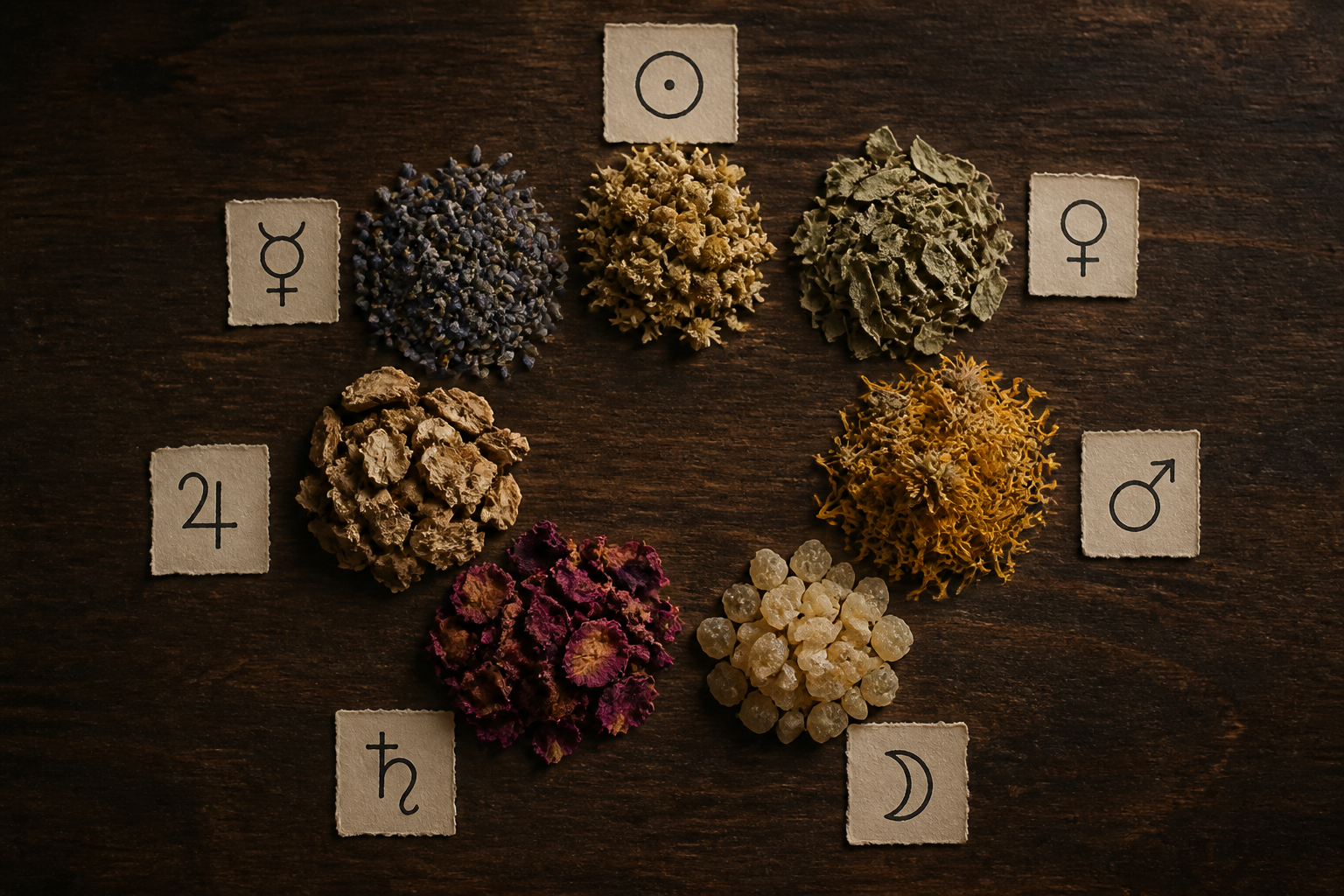
A reference guide to planetary herb attributions, drawn from Culpeper, Paracelsus, and medieval herbal tradition.
Why Herbalists Assigned Plants to Planets
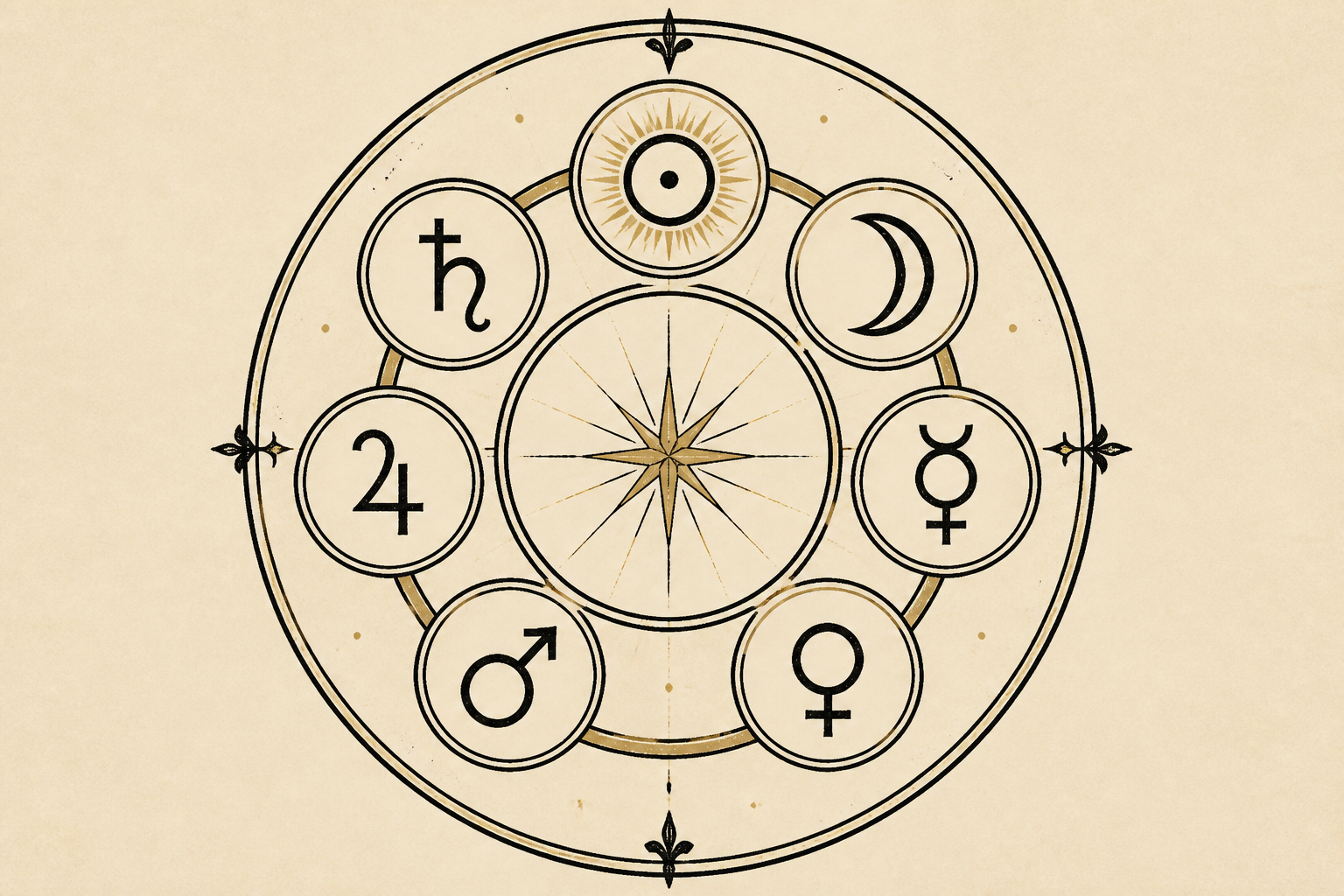
Long before modern botany, herbalists organized plants using the same symbolic system that governed astrology, medicine, and alchemy: the seven classical planets — Sun, Moon, Mercury, Venus, Mars, Jupiter, and Saturn. Each planet was believed to govern certain qualities — heat, moisture, expansion, restriction — and plants were assigned to the planet whose qualities they seemed to express. For the fuller philosophical grounding of this system, see As Above, So Below: Why Plants Answer to Planets and The Seven Planets in the Garden.
This wasn’t decorative. Physicians like Nicholas Culpeper used planetary rulership to guide herb selection for a patient’s ailment, matching a plant’s ruling planet to the body part or condition it was thought to influence. Paracelsus folded this same logic into his broader alchemical framework, where planetary correspondence often intersected with a plant’s role as Salt, Sulfur, or Mercury.
Planetary Herb Correspondence Chart
| Planet | Ruling Herbs | Traditional Properties | Best Day / Hour to Harvest |
|---|---|---|---|
| Sun | Rosemary, Chamomile, St. John’s Wort | Vitality, clarity, warmth | Sunday, first hour after sunrise |
| Moon | Chickweed, Poppy, Willow | Cooling, receptive, calming | Monday, first hour after sunrise |
| Mercury | Lavender, Fennel, Dill | Mental clarity, communication, quickness | Wednesday, first hour after sunrise |
| Venus | Rose, Yarrow, Mint | Harmony, attraction, soothing | Friday, first hour after sunrise |
| Mars | Nettle, Garlic, Basil | Drive, heat, protection | Tuesday, first hour after sunrise |
| Jupiter | Sage, Dandelion, Borage | Expansion, abundance, optimism | Thursday, first hour after sunrise |
| Saturn | Comfrey, Mullein, Horsetail | Structure, grounding, endurance | Saturday, first hour after sunrise |
Note: many herbs appear across multiple traditions with different planetary attributions depending on the source text — the above reflects commonly cited correspondences, not a single universal standard.
How Planetary Timing Works
Traditional practitioners distinguished between planetary days and planetary hours:
- Planetary days are the familiar days of the week, each ruled by one of the seven classical planets (the names even survive in most European languages — mercredi, Wednesday’s French name, literally means “Mercury’s day”).
- Planetary hours divide each day and night into twelve unequal hours, each ruled by a different planet in a fixed rotating sequence, starting with the day’s ruling planet at sunrise.
Practitioners who followed this system would harvest, prepare, or work with an herb during the day and hour of its ruling planet, believing this timing reinforced the plant’s natural qualities and intention behind its use. For a deeper look at how this timing system actually worked, see Planetary Days and Hours: How Alchemists Timed Their Work.
Step-by-Step: Making a Planetary Herbal Oil
- Choose your herb based on the intention or quality you want to work with, using the chart above.
- Identify the correct planetary day and hour. Planetary hour calculators are widely available online if you want precision beyond “the ruling day.”
- Harvest or gather your herb during that window, if practical. If not, simply begin the infusion at that time.
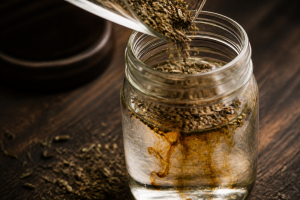
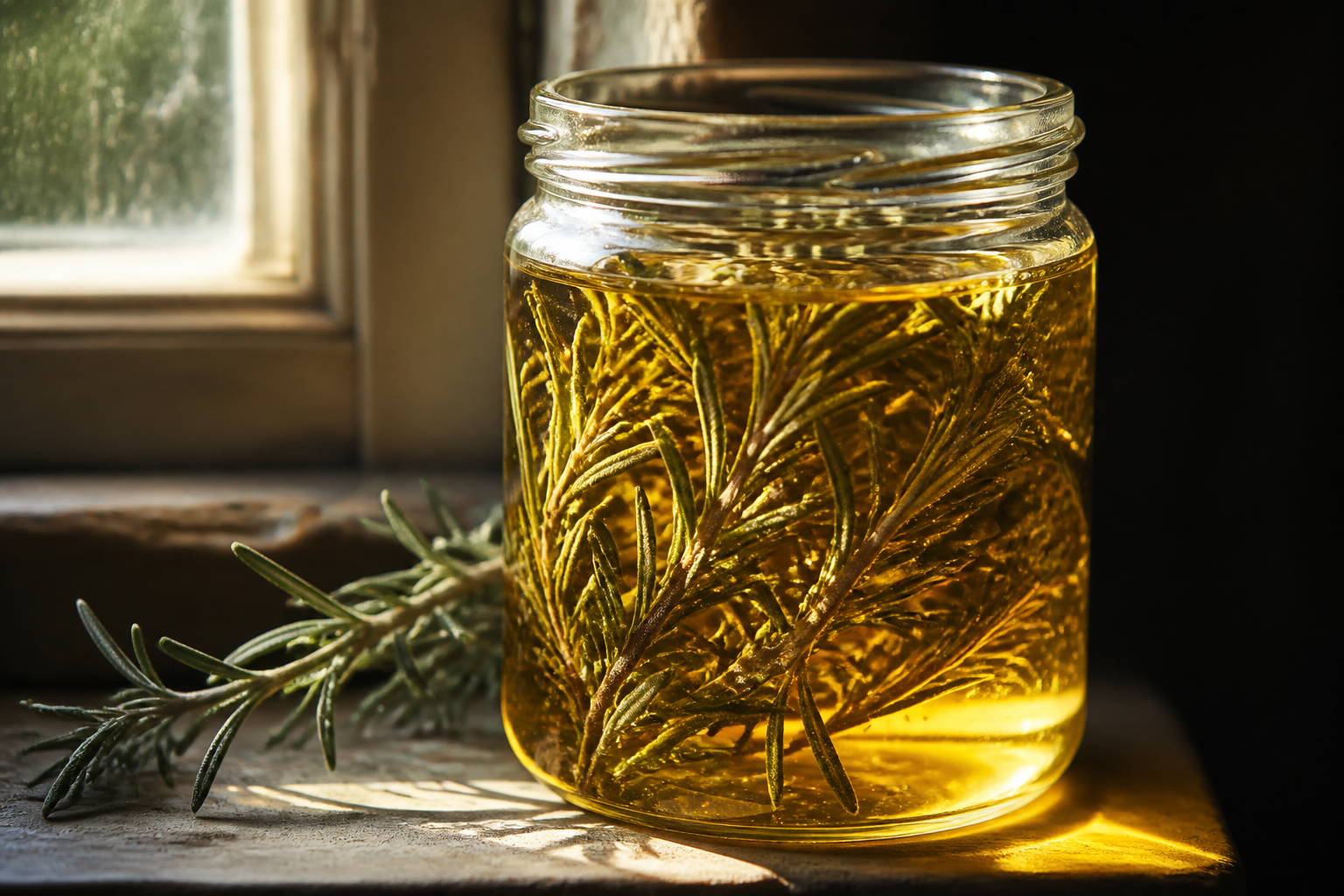
- Pack the herb loosely into a clean, dry glass jar, filling it about two-thirds full.
- Cover completely with a carrier oil — olive, sweet almond, or jojoba all work well.
- Seal and label the jar with the herb, planet, and date.
- Infuse for 4–6 weeks in a warm, dim spot, shaking gently every few days.
- Strain through muslin cloth, pressing to extract as much oil as possible.
- Bottle in a dark glass container and store away from direct light.
Connecting to Spagyrics and the Tria Prima
Planetary correspondence isn’t just a standalone system — it overlaps closely with the Tria Prima framework used in spagyric preparation. Herbs ruled by fiery, expansive planets (Sun, Mars, Jupiter) are often treated as strong Sulfur carriers, while cooling, structural herbs (Saturn, Moon) lean toward the Salt role. Mercury-ruled herbs, fittingly, are frequently chosen for their volatile, aromatic Mercury fraction in spagyric work.
If you’re building toward a full spagyric preparation, this chart is a useful starting point for choosing which herb’s qualities you want to emphasize. See our Spagyric Tincture Guide for the full separation-purification-recombination process, or our Tria Prima Ointment Guide for a more condensed, practical application.
Worth having on hand: a set of dark amber glass bottles for bottling and storing the finished planetary oil away from direct light, as the guide recommends.
Nothing in this glossary entry constitutes medical advice. Spagyric preparations are experimental products; consult a qualified medical professional before using any plant preparation described here.
Frequently Asked Questions
Why did traditional herbalists assign plants to planets?
In this tradition, herbalists organized plants using the same symbolic system that governed astrology, medicine, and alchemy: the seven classical planets. Each planet was believed to govern certain qualities—heat, moisture, expansion, restriction—and plants were assigned to the planet whose qualities they seemed to express. Physicians like Nicholas Culpeper used planetary rulership to guide herb selection for a patient’s ailment.
What is the difference between planetary days and hours?
Planetary days are the days of the week, each ruled by one of the seven classical planets. Planetary hours divide each day and night into twelve unequal hours, each ruled by a different planet in a fixed rotating sequence, starting with the day’s ruling planet at sunrise. Traditional practitioners harvested or prepared herbs during the day and hour of their ruling planet.
How long should a planetary herbal oil infuse?
A planetary herbal oil should infuse for 4–6 weeks in a warm, dim spot. During this time, shake the jar gently every few days. Once the infusion period is complete, strain the oil through muslin cloth, pressing to extract as much oil as possible, then bottle in a dark glass container away from direct light.
How do planetary correspondences connect to spagyrics?
In this tradition, planetary correspondence overlaps closely with the Tria Prima framework used in spagyric preparation. Herbs ruled by fiery, expansive planets (Sun, Mars, Jupiter) are often treated as strong Sulfur carriers, while cooling, structural herbs (Saturn, Moon) lean toward the Salt role. Mercury-ruled herbs are frequently chosen for their volatile, aromatic Mercury fraction in spagyric work.
About This Article

Written by Kyle Bamboo. Kyle Bamboo has spent twelve years following the hermetic tradition of herbalism out of dusty reprints and into a home apothecary — spagyrics, planetary correspondences, and the strange internal logic of plant alchemy. Muddle and Mend takes its name from solve et coagula, dissolve and combine. He writes about the actual tradition, with its history, its vocabulary, and its genuine strangeness, not the Instagram version. More about this site.
Scope and limits. Kyle writes from a personal practice in traditional herbalism, not clinical training. Herbs interact with prescription medications and are not regulated as drugs — check interactions and talk to a pharmacist or clinician before taking anything.
Verify this against a primary source
Specifics change, and your situation may differ from the one described here. These are the authorities worth checking directly:
- NCCIH — herb safety, evidence and known interactions
- MedlinePlus Herbs and Supplements — documented interactions and cautions
- FDA Dietary Supplements — regulatory status and safety alerts