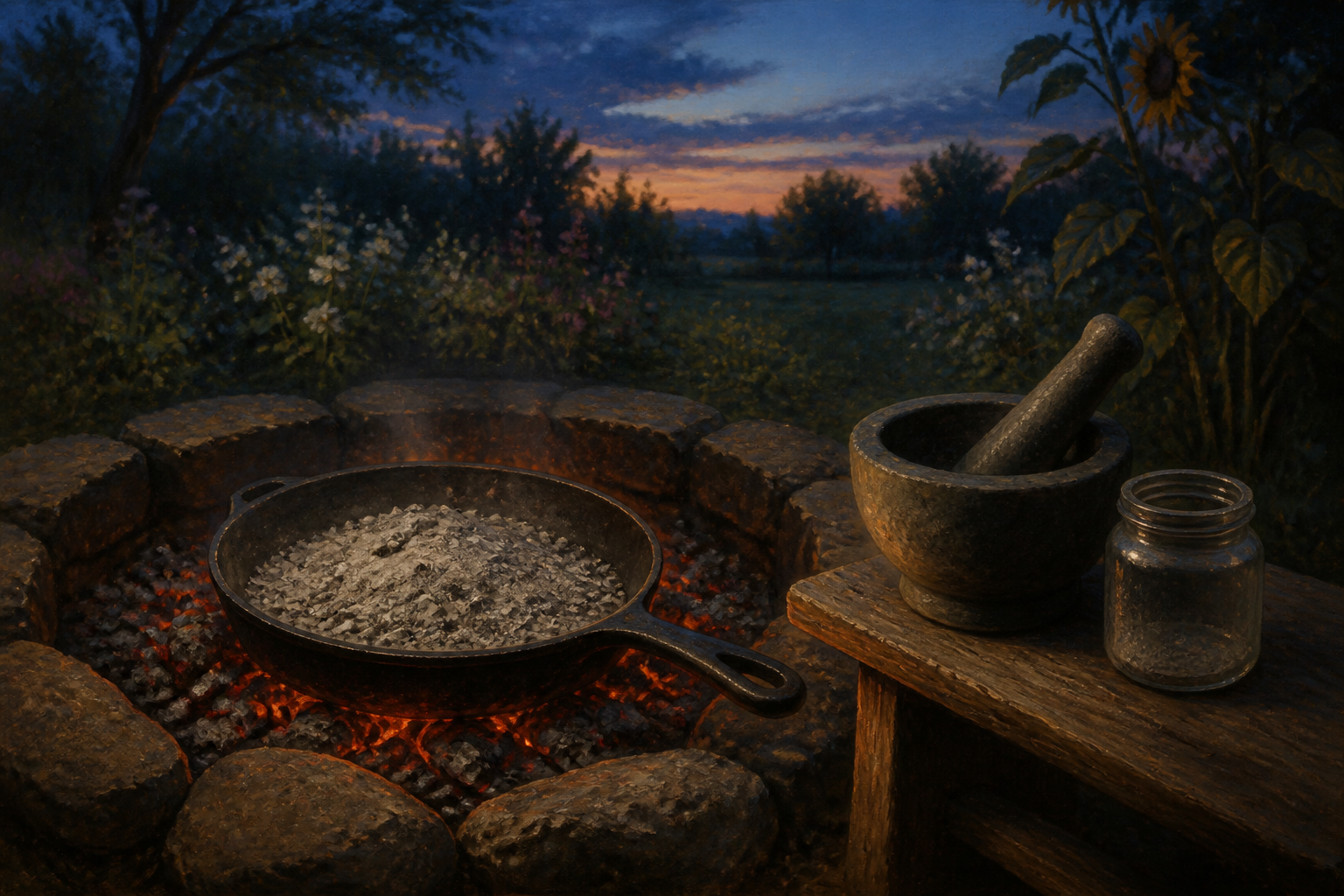
Yes. A crucible is refractory, not magical—a container that tolerates sustained heat without cracking or shedding material into your ash. Several things in an ordinary kitchen or garden will do the same job. The real constraint is heat, not hardware.
What the Crucible Is Actually For
In plant spagyrics, the crucible’s sole purpose is to hold the spent plant matter—the marc, or caput mortuum—while it burns and calcines to ash. That ash is the source of the plant’s Salt, the third of the tria prima and the physical embodiment of the plant’s mineral essence. Everything hinges on getting that ash clean and, ideally, white. For more on what the Salt represents and how whiteness signals the completion of calcination, see Salt: The Body and the White Ash.
The crucible is refractory—meaning it resists high heat without cracking, warping, or contaminating what’s inside. That’s the entire specification. A pot that does that works.
What Works Instead
- A stainless steel pan or bowl: Stainless tolerates direct flame and sustained heat without degrading or shedding into the ash. It’s reliable and common.
- Cast iron: Cast iron has been holding fire for centuries. It won’t crack under calcination heat, though you’ll want to dry it thoroughly before use.
- Unglazed terracotta or earthenware: A plain terracotta saucer or dish rated for direct heat works well. The material is porous and refractory; just make sure it’s unglazed or you’re inviting contamination.
- Fireclay or stoneware marked for direct heat: These are made to survive the kiln and will survive your fire. Check the label to confirm they’re rated for direct application to flame.
What Not to Use
- Aluminium: It melts or degrades at sustained high heat and can introduce unwanted material into your ash.
- Galvanised metal: The zinc coating releases toxic fumes when heated. This is genuinely dangerous. Do not use it.
- Non-stick coatings: Teflon and similar finishes break down at high heat and contaminate the ash. Avoid entirely.
- Glazed ceramics of unknown origin: Glaze composition varies widely. Some glazes release lead or cadmium under heat. Unless you know the glaze, leave it alone.
- Anything with plastic or wooden components: These will combust or melt, ruining both the vessel and the work.
The Real Problem Is Heat, Not the Vessel
A domestic kitchen burner—gas or electric—will char plant matter black, but it will not sustain the temperature needed to drive black ash through grey to white. That’s the actual bottleneck. A stainless pan on a stovetop will hold your marc perfectly well while it sits there stubbornly refusing to calcine.
To reach true calcination temperatures, you need charcoal, a barbecue, a chimney starter, a small kiln, or a portable forge. These tools reach and hold the sustained high heat that white ash demands. For a practical survey of home-scale heat sources and how to use them, see The Home Athanor.
The Grind-and-Return Cycle
If full whitening is out of reach, practitioners have always had a workaround: the grind-and-return cycle. Burn your marc until it stops blackening. Cool the ash. Grind it to a fine powder. Return it to the fire. Repeat.
Each cycle exposes fresh unburned carbon to the heat and lightens the overall ash. A cycle takes an hour or two. Historically, practitioners repeated this process many times—sometimes dozens of times—to drive the ash toward whiteness. It’s labour-intensive but effective, and it demands nothing but your time and the same modest heat source you started with. Calcination: Why Alchemists Burn What They Love explores the reasoning and rhythm of the process in more depth.
Grey Ash Is Not a Failure
White ash is the ideal. Many home practitioners never reach it, and that’s honest. Grey ash is still usable, and it’s still a spagyric by the definition that matters: separation of the plant into its three principles, purification of each, and recombination. The Salt is present, refined, and alive in the tincture. It’s simply less refined than white ash would be.
I’ve made grey-ash spagyrics with a cast iron pan and charcoal. I’ve ground and returned the ash three times. The result was grey, not white, but it was medicine. If you’re working with ordinary kitchen equipment and ordinary heat, grey ash is a realistic and legitimate endpoint. See How to Make a Spagyric Tincture for the full process from start to finish.
Working Safely
Plant ash is alkaline—mostly potassium carbonate—and caustic to skin and eyes. Burning plant matter produces smoke and fine particulates that you don’t want to breathe.
- Work outdoors or ensure strong ventilation if you’re near an open window or exhaust.
- Wear eye protection and gloves when handling ash.
- Keep water close by in case of skin contact.
- Never calcine a plant whose toxicity you haven’t checked. Some compounds carry into smoke and ash; inhaling or touching the result of burning an unknown or known-toxic plant is a real risk.
Frequently Asked Questions
What is a crucible actually used for in spagyrics?
In plant spagyrics, the crucible holds the spent plant matter—the marc or caput mortuum—while it burns and calcines to ash. That ash is the source of the plant’s Salt, the third of the tria prima and the physical embodiment of the plant’s mineral essence. The crucible’s only job is to be refractory: able to tolerate sustained heat without cracking, warping, or shedding material into what’s inside.
Can you use stainless steel instead of a crucible?
Yes. A stainless steel pan or bowl is refractory and tolerates direct flame and sustained heat without degrading or contaminating the ash. It’s reliable and common, making it a practical substitute for a traditional crucible in plant spagyrics.
Why does a kitchen stove burner fail for calcination?
A domestic kitchen burner—gas or electric—will char plant matter black, but cannot sustain the temperature needed to drive black ash through grey to white. To reach true calcination temperatures, you need charcoal, a barbecue, a chimney starter, a small kiln, or a portable forge. Heat, not the vessel, is the actual bottleneck.
What is the grind-and-return cycle in ash calcination?
The grind-and-return cycle is a workaround when full whitening is unreachable. Burn your marc until it stops blackening, cool it, grind it to fine powder, and return it to the fire. Repeat this labour-intensive process many times—sometimes dozens—to drive the ash toward whiteness, with each cycle taking an hour or two.
Is grey ash usable in spagyrics or only white ash?
White ash is the ideal, but grey ash is still usable and legitimate. Grey ash is still a spagyric by definition: separation of the plant into its three principles, purification of each, and recombination. The Salt is present, refined, and alive in the tincture, simply less refined than white ash would be.
Why should you never use galvanised metal for calcination?
The zinc coating on galvanised metal releases toxic fumes when heated. This is genuinely dangerous and must be avoided entirely in any calcination work.
About This Article

Written by Kyle Bamboo. Kyle Bamboo has spent twelve years following the hermetic tradition of herbalism out of dusty reprints and into a home apothecary — spagyrics, planetary correspondences, and the strange internal logic of plant alchemy. Muddle and Mend takes its name from solve et coagula, dissolve and combine. He writes about the actual tradition, with its history, its vocabulary, and its genuine strangeness, not the Instagram version. More about this site.
Scope and limits. Kyle writes from a personal practice in traditional herbalism, not clinical training. Herbs interact with prescription medications and are not regulated as drugs — check interactions and talk to a pharmacist or clinician before taking anything.
Verify this against a primary source
Specifics change, and your situation may differ from the one described here. These are the authorities worth checking directly:
- NCCIH — herb safety, evidence and known interactions
- MedlinePlus Herbs and Supplements — documented interactions and cautions
- FDA Dietary Supplements — regulatory status and safety alerts