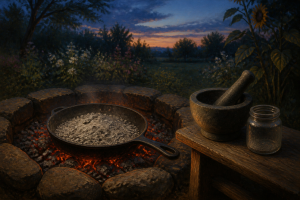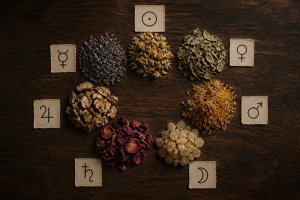
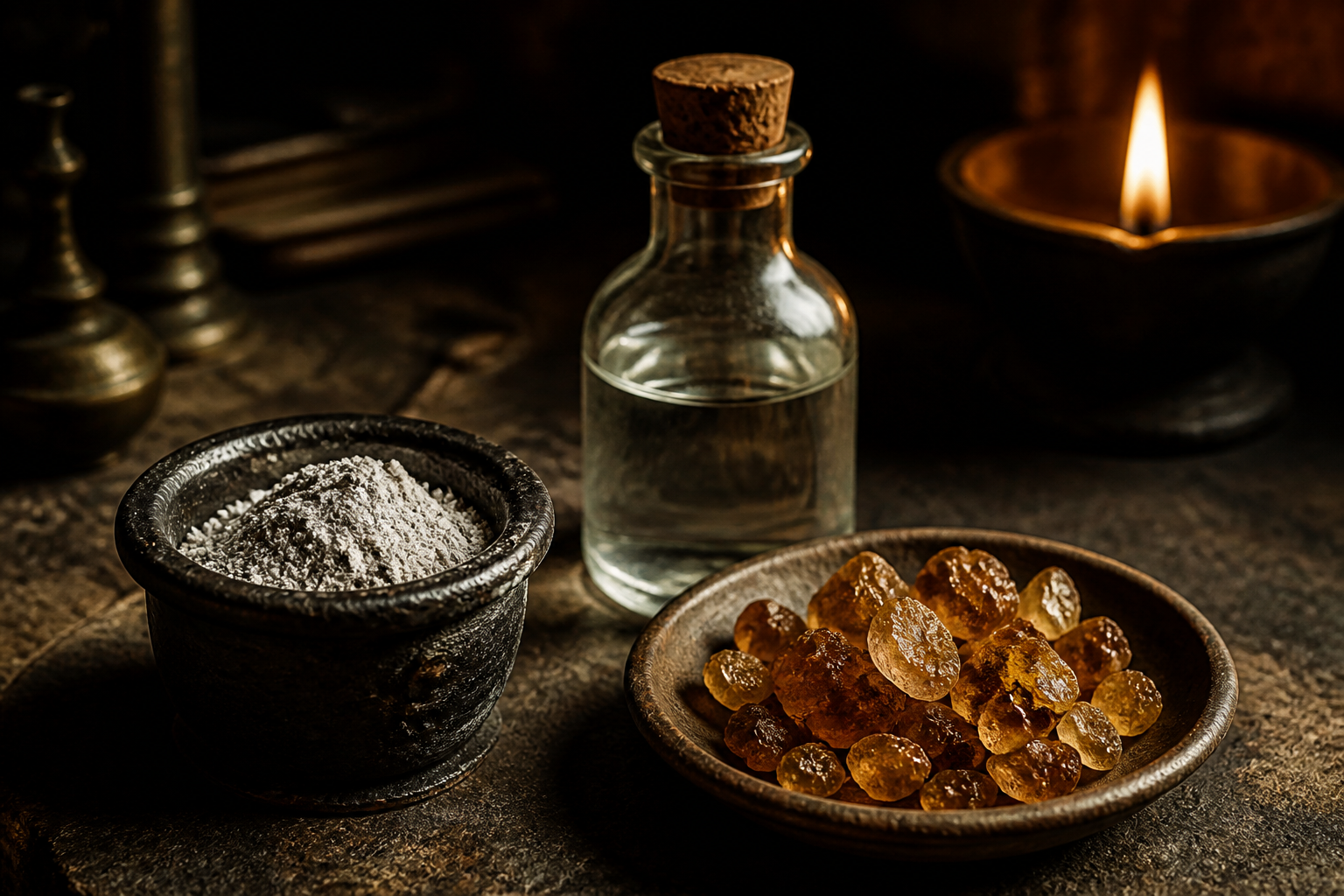
A hands-on demonstration of Paracelsus’s three alchemical principles.
From Theory to Practice
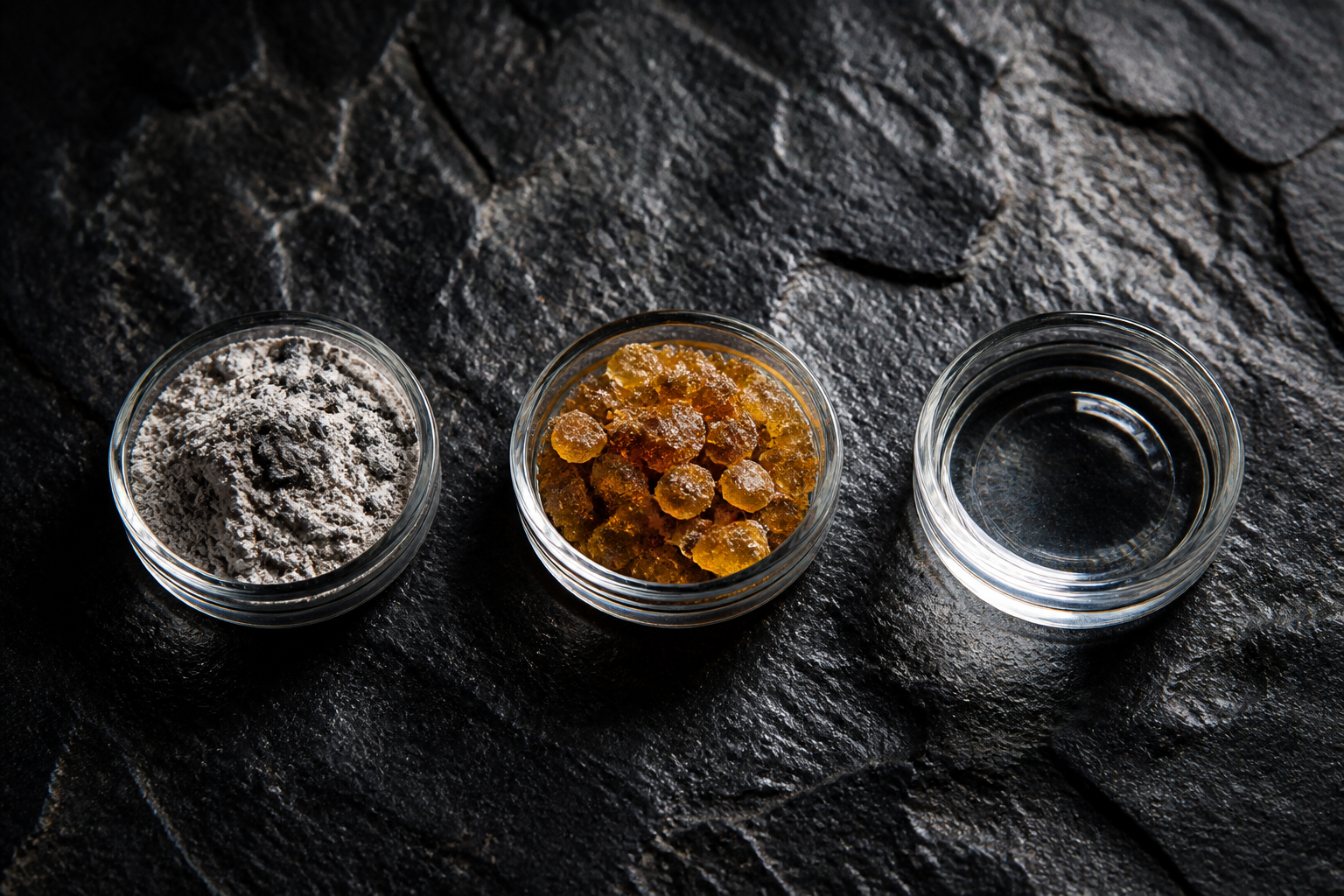
Paracelsus proposed that all matter — including every plant, mineral, and living body — is composed of three principles: Salt (the body, the fixed and mineral component), Sulfur (the soul, the combustible and oil-soluble component), and Mercury (the spirit, the volatile and transformative component). Together these are known as the Tria Prima. For the full grounding in each principle, see Salt: The Body and the White Ash, Sulfur: The Soul in the Scent, and Mercury: The Spirit That Binds.
This guide walks through a practical, hands-on way to isolate all three principles from a single plant and recombine them into a working paste or ointment — a smaller-scale, more condensed version of full spagyric preparation. The finished ointment is intended as a symbolic and ceremonial representation of the Tria Prima framework, not as a medical product.
What You’ll Need
- A single herb of your choice (see our Herbs and Planets guide if you want to select by planetary correspondence)
- High-proof alcohol
- A heatproof dish for calcination
- Distilled water
- Beeswax (for binding the final paste)
- A double boiler or heatproof bowl over simmering water
- Small jars for storage
Step 1: Extracting Mercury
Mercury represents the plant’s volatile, aromatic essence.
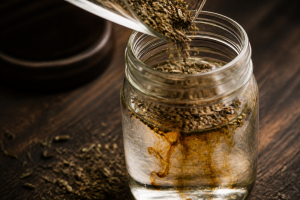
- Chop your herb finely and cover it with alcohol in a sealed jar.
- Let it macerate for 2–3 weeks in a dark, room-temperature spot, shaking occasionally.
- Strain the liquid through muslin cloth. This liquid is your Mercury fraction. Set the strained plant solids aside for Step 2.
(If you have distillation equipment, gently distilling this liquid will concentrate the Mercury fraction further — see our Spagyric Tincture guide for the full distillation method.)
Step 2: Isolating Salt
Salt represents the plant’s fixed, mineral body.
- Spread the reserved plant solids from Step 1 onto a heatproof dish.
- Burn the material down to a fine ash in a well-ventilated space, crushing and re-burning as needed until fully reduced.
- Dissolve the ash in a small amount of distilled water, then filter out any remaining debris.
- Evaporate the filtered liquid slowly over low heat until only dry mineral salts remain.
(This is the same purification process used in full spagyric tincturing — see our Spagyric Tincture guide for more detail on repeated purification.)
Step 3: Rendering Sulfur
Sulfur represents the plant’s oil-soluble, combustible “soul” — distinct from the lighter Mercury fraction.
- If your Mercury extraction (Step 1) was strong, you may notice a resinous or oily residue separating out at the bottom of the strained liquid — this is your Sulfur fraction.
- Alternatively, gently warm your reserved plant solids (before or instead of full calcination) in a small amount of oil to draw out the plant’s resinous compounds, then strain.
- Reserve this oily/resinous extract separately from your Mercury liquid and your Salt.
Step 4: Combining Into a Paste
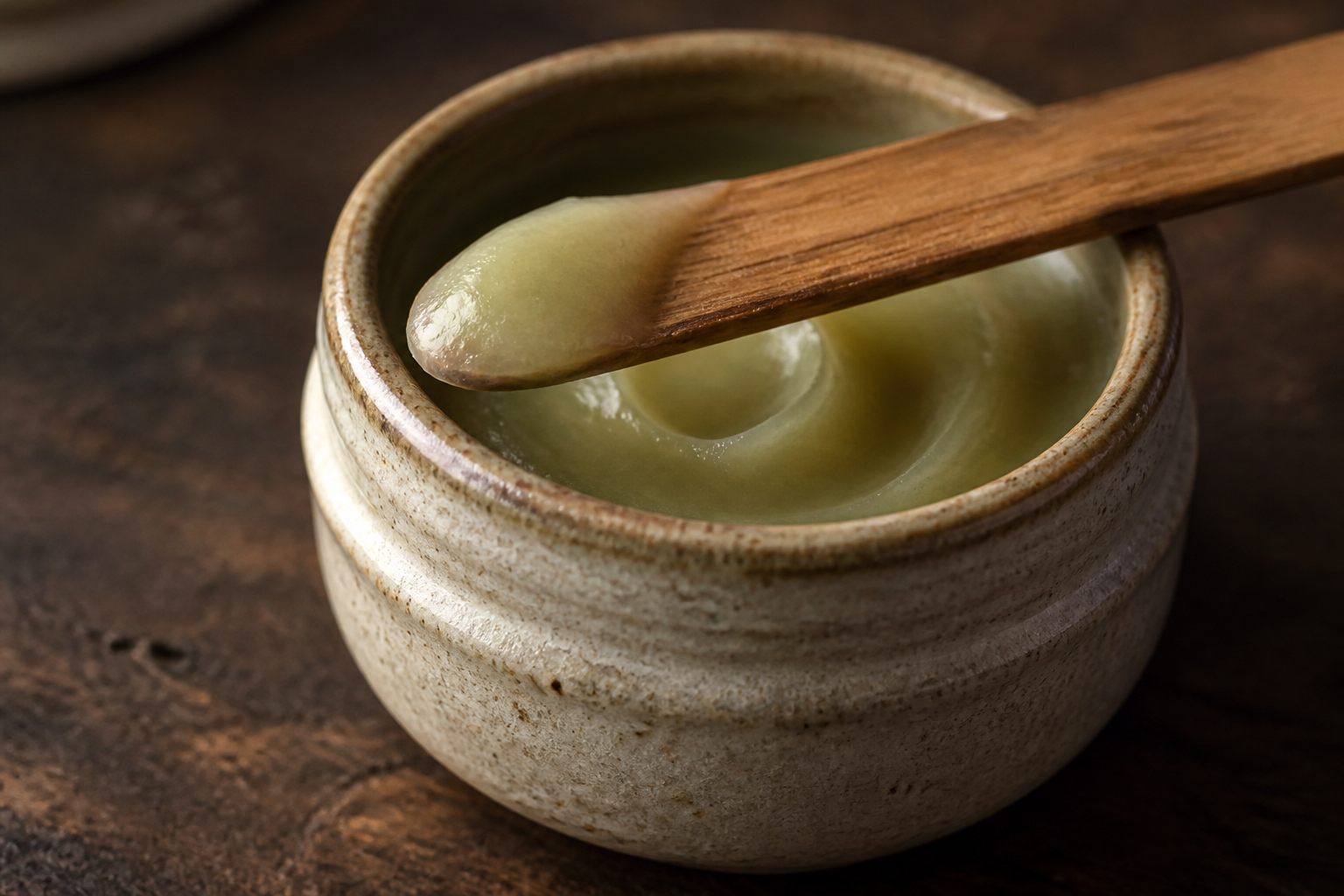
- Melt a small amount of beeswax in a double boiler.
- Stir in your Sulfur fraction (the oily/resinous extract) until fully incorporated.
- Gently warm your purified Salt and stir it into the mixture.
- Slowly incorporate a small amount of your Mercury liquid, stirring continuously — the mixture should come together into a soft, spreadable paste as it cools.
- Pour into small jars while still warm and allow to set at room temperature.
The traditional proportions here are not fixed numeric ratios — practitioners historically adjusted by feel and consistency, adding more wax for a firmer paste or more Mercury liquid for a softer one.
Historical Context
Paracelsus applied this Salt-Sulfur-Mercury framework to the medicine of his era, believing that isolating and purifying each principle before recombining them produced a more refined and effective remedy than using a plant in its raw form. This idea broke sharply from the humoral medicine dominant at the time and laid groundwork for what later became known as spagyric medicine — a term derived from Greek roots meaning “to separate” and “to combine.”
A Note on This Practice
This guide presents the Tria Prima process as a historical and ceremonial alchemical practice. It is not a medical treatment, and the resulting paste is not evaluated, standardized, or intended for therapeutic use. If you’re interested in the philosophical and symbolic dimension of this work, see our companion post on Solve et Coagula as a working process, which explores the dissolution-and-recombination principle underlying everything described here.
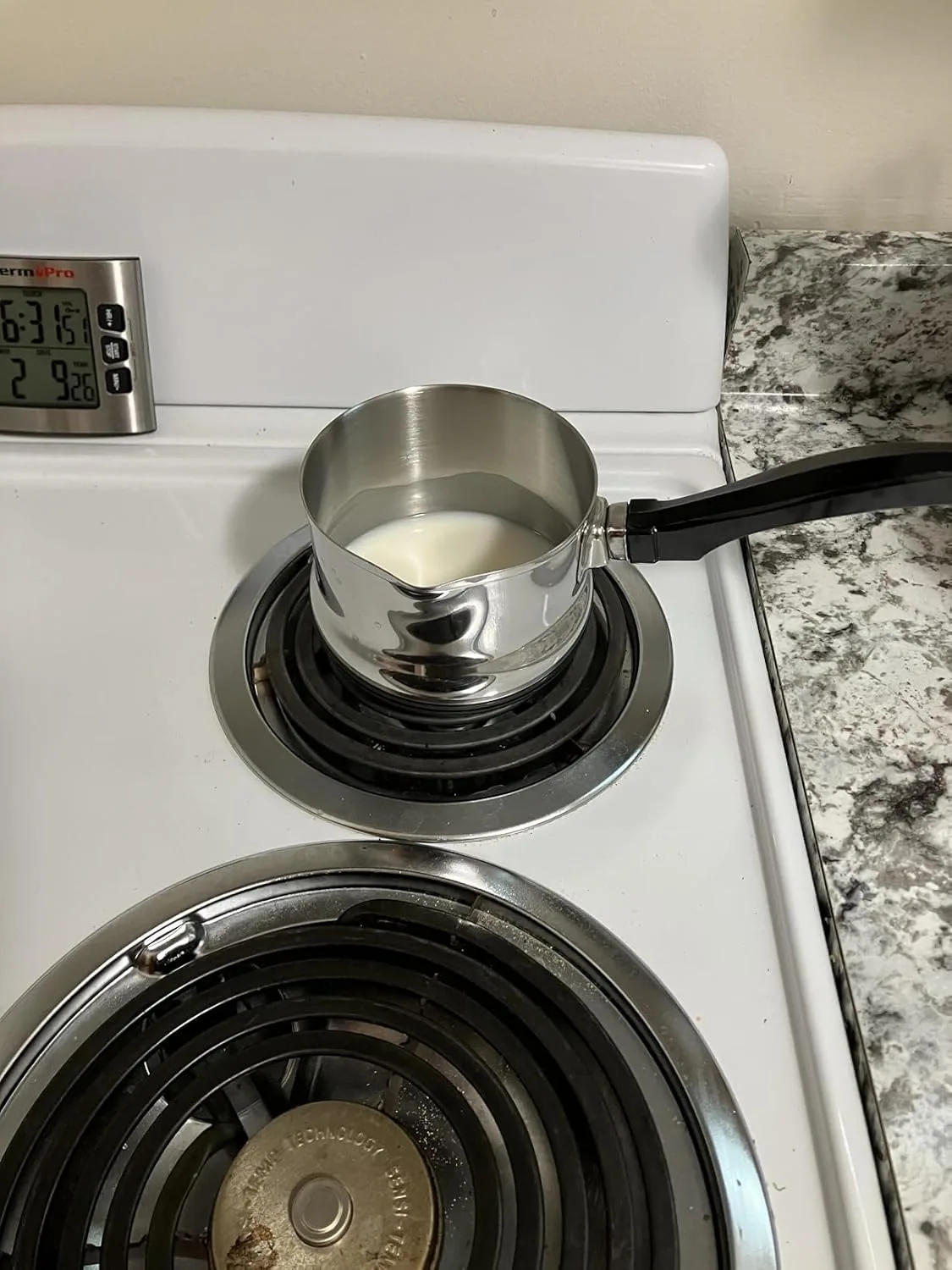
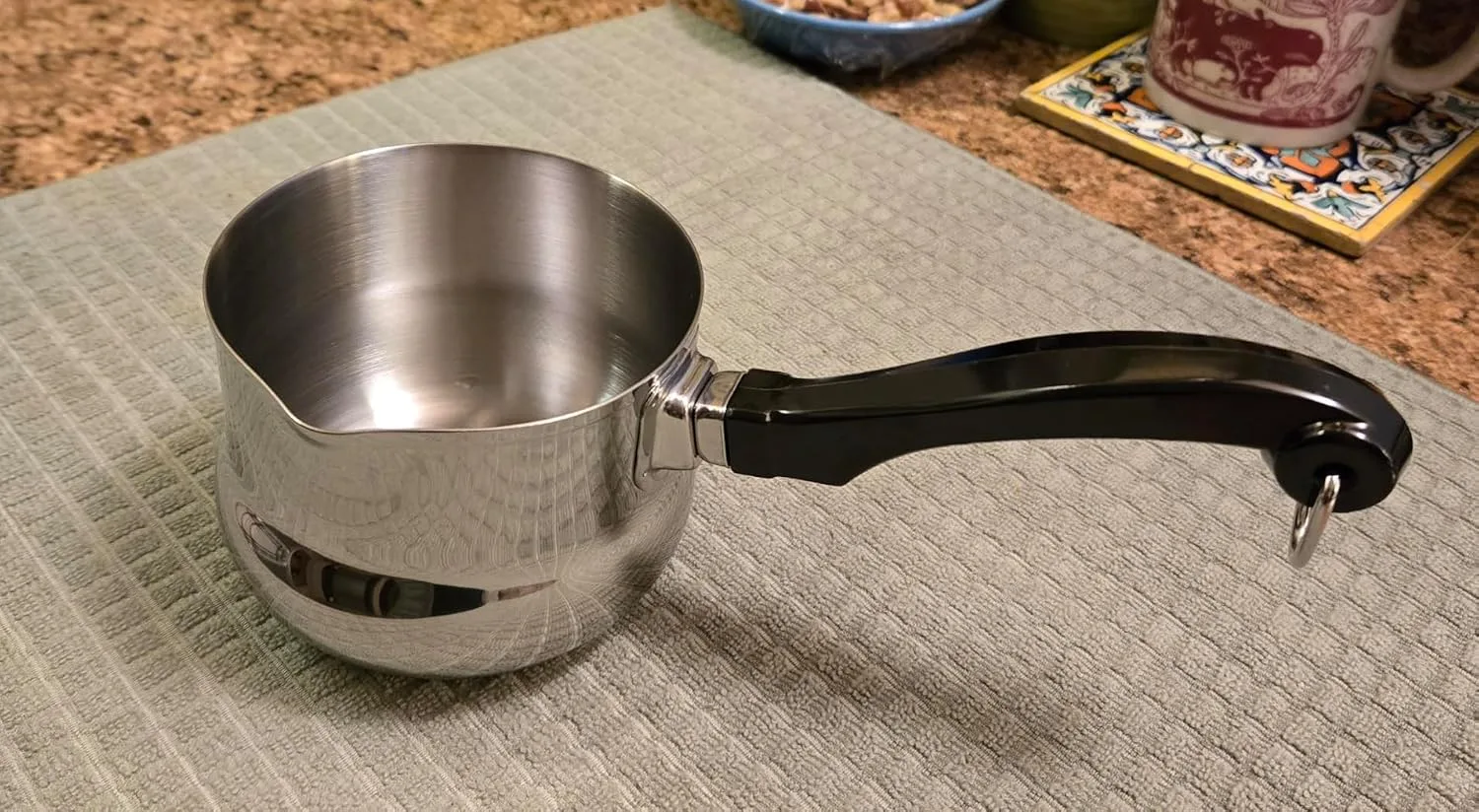
Worth having on hand: a proper stainless steel double boiler — steadier and more even than a bowl balanced over a pot for melting the beeswax in Step 4.
Nothing in this glossary entry constitutes medical advice. Spagyric preparations are experimental products; consult a qualified medical professional before using any plant preparation described here.
Frequently Asked Questions
What are the Tria Prima in Paracelsus’s alchemy?
The Tria Prima are three alchemical principles: Salt (the body, fixed and mineral), Sulfur (the soul, combustible and oil-soluble), and Mercury (the spirit, volatile and transformative). Paracelsus held that all matter—plants, minerals, and living bodies—is composed of these three principles working together.
How long does Mercury extraction take in this method?
Mercury extraction requires macerating finely chopped herb covered with high-proof alcohol in a sealed, dark jar at room temperature for two to three weeks, shaking occasionally. After this period, you strain the liquid through muslin cloth to isolate the Mercury fraction.
What temperature should I use when evaporating the Salt?
The article specifies evaporating the filtered salt liquid slowly over low heat until only dry mineral salts remain. It does not give a specific temperature figure, only that the process should be slow and gentle.
Can I skip calcination and extract Sulfur another way?
Yes. Instead of calcinating plant solids, you can gently warm them in a small amount of oil to draw out resinous compounds, then strain. You may also notice a resinous or oily residue separating at the bottom of your Mercury liquid—this is Sulfur as well.
About This Article

Written by Kyle Bamboo. Kyle Bamboo has spent twelve years following the hermetic tradition of herbalism out of dusty reprints and into a home apothecary — spagyrics, planetary correspondences, and the strange internal logic of plant alchemy. Muddle and Mend takes its name from solve et coagula, dissolve and combine. He writes about the actual tradition, with its history, its vocabulary, and its genuine strangeness, not the Instagram version. More about this site.
Scope and limits. Kyle writes from a personal practice in traditional herbalism, not clinical training. Herbs interact with prescription medications and are not regulated as drugs — check interactions and talk to a pharmacist or clinician before taking anything.
Verify this against a primary source
Specifics change, and your situation may differ from the one described here. These are the authorities worth checking directly:
- NCCIH — herb safety, evidence and known interactions
- MedlinePlus Herbs and Supplements — documented interactions and cautions
- FDA Dietary Supplements — regulatory status and safety alerts