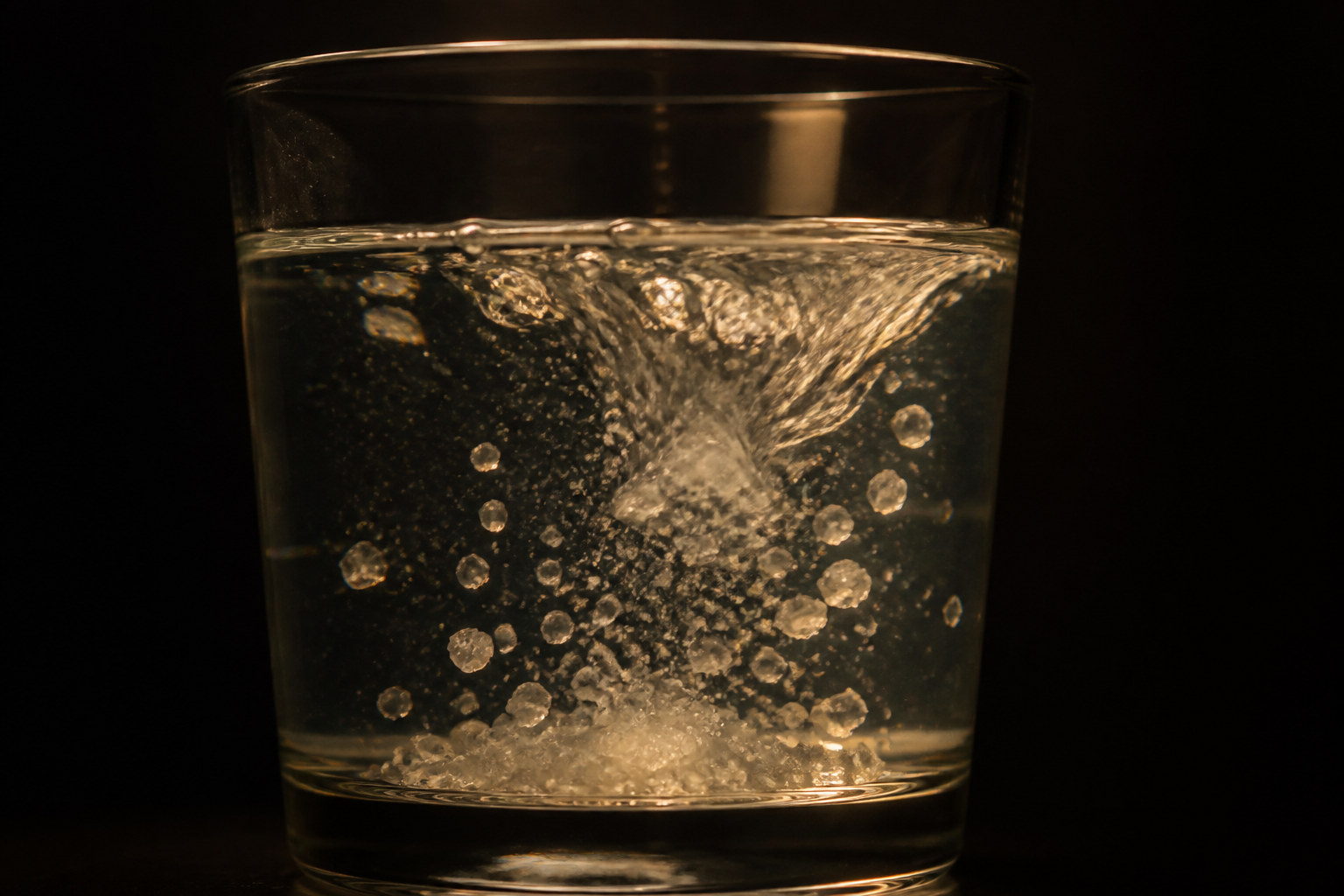
What “dissolve and coagulate” means — and a simple way to see it in action.
This page is the process, not the etymology. If you want the phrase itself unpacked term by term — the Latin, the translation, and where it comes from — read Solve et Coagula: What the Phrase Actually Means first. What follows is what those two words look like on a workbench, using a demonstration you can run tonight in a drinking glass. The cycle it shows runs through nearly every branch of alchemical practice, including the Tria Prima framework and the spagyric medicine developed by Paracelsus.
| Stage | Latin Term | Action | Application |
|---|---|---|---|
| Dissolution | Solve | Break down solid structure completely | Literal (salt in water); symbolic (old patterns, beliefs, identities) |
| Recombination | Coagula | Reform into new, refined structure | Literal (crystal formation); symbolic (reconstructed identity) |
| Paracelsian Framework | Tria Prima | Separate into Salt, Sulfur, Mercury; recombine | Herbal and mineral medicine-making |
| Extended Process | Spagyric | Multi-stage separation, purification, recombination | Plant material transformation |
A Simple Illustrative Process: Salt, Dissolved and Reformed
You don’t need a laboratory to see solve et coagula in action. Table salt dissolved and recrystallized in water is the clearest, most accessible demonstration of the principle — and it’s the example many alchemical texts return to.
Step 1 — Solve (Dissolve)
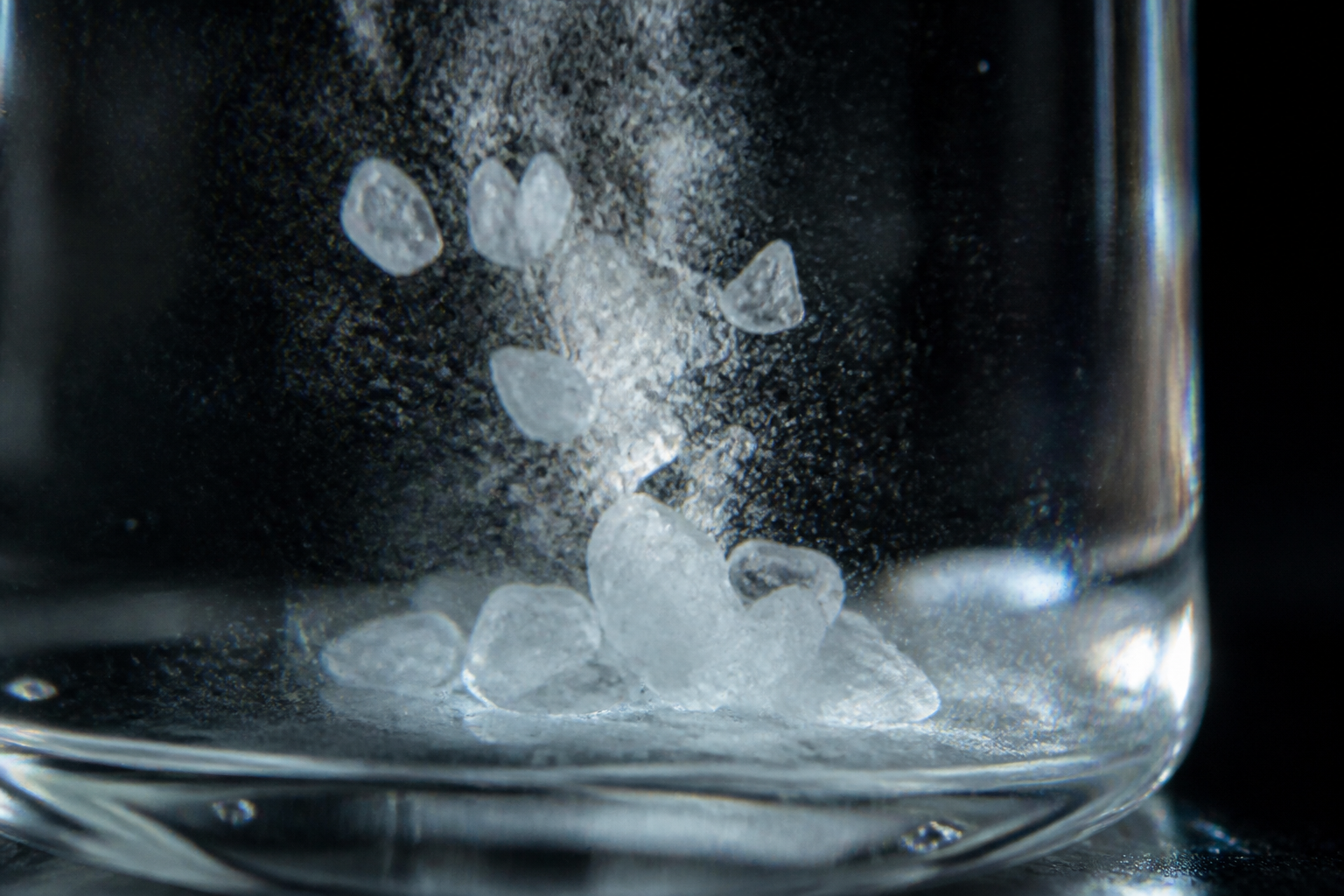
- Fill a clear glass with warm water.
- Stir in salt a spoonful at a time until no more will dissolve.
- Watch as the salt crystals disappear entirely into the water — the solid structure is broken down completely, seemingly vanishing.
Step 2 — Coagula (Recombine)
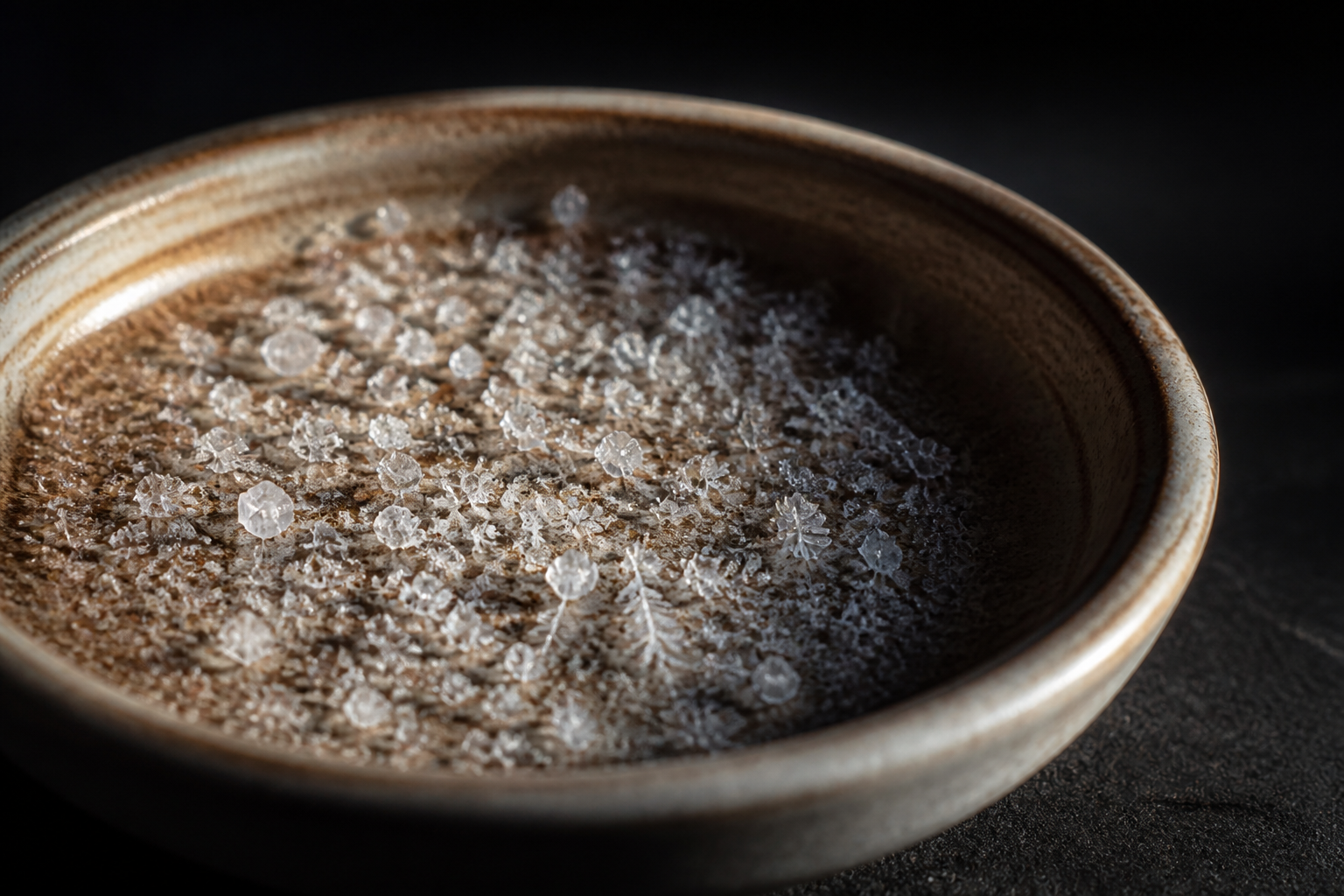
- Pour the saltwater into a shallow, wide dish.
- Set it somewhere warm and undisturbed, and let the water evaporate slowly over several days.
- As the water disappears, watch new salt crystals form — often larger, more defined, and more geometrically distinct than the original grains.
The salt that emerges is chemically the same substance you started with — but its form has been broken down and rebuilt. This simple cycle is the physical seed of a much larger symbolic idea.
The Symbolic and Spiritual Parallel
Alchemists, particularly during the Renaissance, read this dissolve-and-recombine cycle onto much more than minerals. Solve et coagula became a model for inner transformation: breaking down old patterns, beliefs, or identities (solve) in order to reconstruct something new and more refined (coagula). This is where the phrase moves from a laboratory instruction into a spiritual one — the alchemist working on the self as much as on matter.
This dual reading — literal and symbolic — is part of why the phrase endured so strongly into Renaissance alchemical art and continues to surface in esoteric and occult symbolism today.
Connecting to Paracelsus
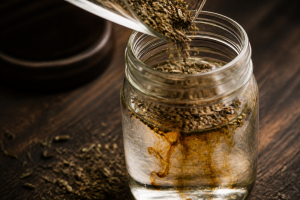
Paracelsus built his entire medical philosophy on a version of this same cycle. His Tria Prima framework — separating a substance into Salt, Sulfur, and Mercury before recombining them — is solve et coagula applied directly to herbal and mineral medicine-making. The spagyric process, with its stages of separation, purification, and recombination, is essentially a more elaborate, multi-part expression of the same two-word principle.
If you want to see this in practice, our Tria Prima Ointment guide and Spagyric Tincture guide both walk through hands-on versions of this same dissolve-and-recombine cycle, applied to plant material rather than salt.
Why This Phrase Endures
Two words, a full philosophy: break down, then rebuild — better, purer, or more refined than before. It’s a compact enough idea to fit on a ring or a tarot card, but expansive enough to underpin an entire alchemical tradition. That combination is likely why solve et coagula has outlasted most of the more technical language of alchemy, remaining recognizable centuries after the furnaces went cold.
Nothing in this glossary entry constitutes medical advice. Spagyric preparations are experimental products; consult a qualified medical professional before using any plant preparation described here.
Frequently Asked Questions
What is solve et coagula demonstrated with salt?
Solve et coagula is shown by dissolving table salt completely in warm water, then allowing the saltwater to evaporate slowly in a shallow dish over several days. New salt crystals form as the water disappears—often larger and more geometrically defined than the original grains, though chemically identical.
How does Paracelsus connect to solve et coagula?
Paracelsus built his medical philosophy on this dissolve-and-recombine cycle. His Tria Prima framework separates a substance into Salt, Sulfur, and Mercury before recombining them—applying solve et coagula directly to herbal and mineral medicine-making through the spagyric process.
Did Renaissance alchemists read solve et coagula symbolically?
Yes. Renaissance alchemists read the dissolve-and-recombine cycle as a model for inner transformation: breaking down old patterns, beliefs, or identities (solve) to reconstruct something new and more refined (coagula). This dual reading—literal and symbolic—made the phrase endure in alchemical art and esoteric symbolism.
Why has solve et coagula lasted longer than other alchemical terms?
The phrase is compact enough to fit on a ring or tarot card yet expansive enough to underpin an entire alchemical tradition. This combination—simplicity paired with philosophical depth—likely explains why solve et coagula remains recognizable centuries after formal alchemy faded.
About This Article

Written by Kyle Bamboo. Kyle Bamboo has spent twelve years following the hermetic tradition of herbalism out of dusty reprints and into a home apothecary — spagyrics, planetary correspondences, and the strange internal logic of plant alchemy. Muddle and Mend takes its name from solve et coagula, dissolve and combine. He writes about the actual tradition, with its history, its vocabulary, and its genuine strangeness, not the Instagram version. More about this site.
Scope and limits. Kyle writes from a personal practice in traditional herbalism, not clinical training. Herbs interact with prescription medications and are not regulated as drugs — check interactions and talk to a pharmacist or clinician before taking anything.
Verify this against a primary source
Specifics change, and your situation may differ from the one described here. These are the authorities worth checking directly:
- NCCIH — herb safety, evidence and known interactions
- MedlinePlus Herbs and Supplements — documented interactions and cautions
- FDA Dietary Supplements — regulatory status and safety alerts