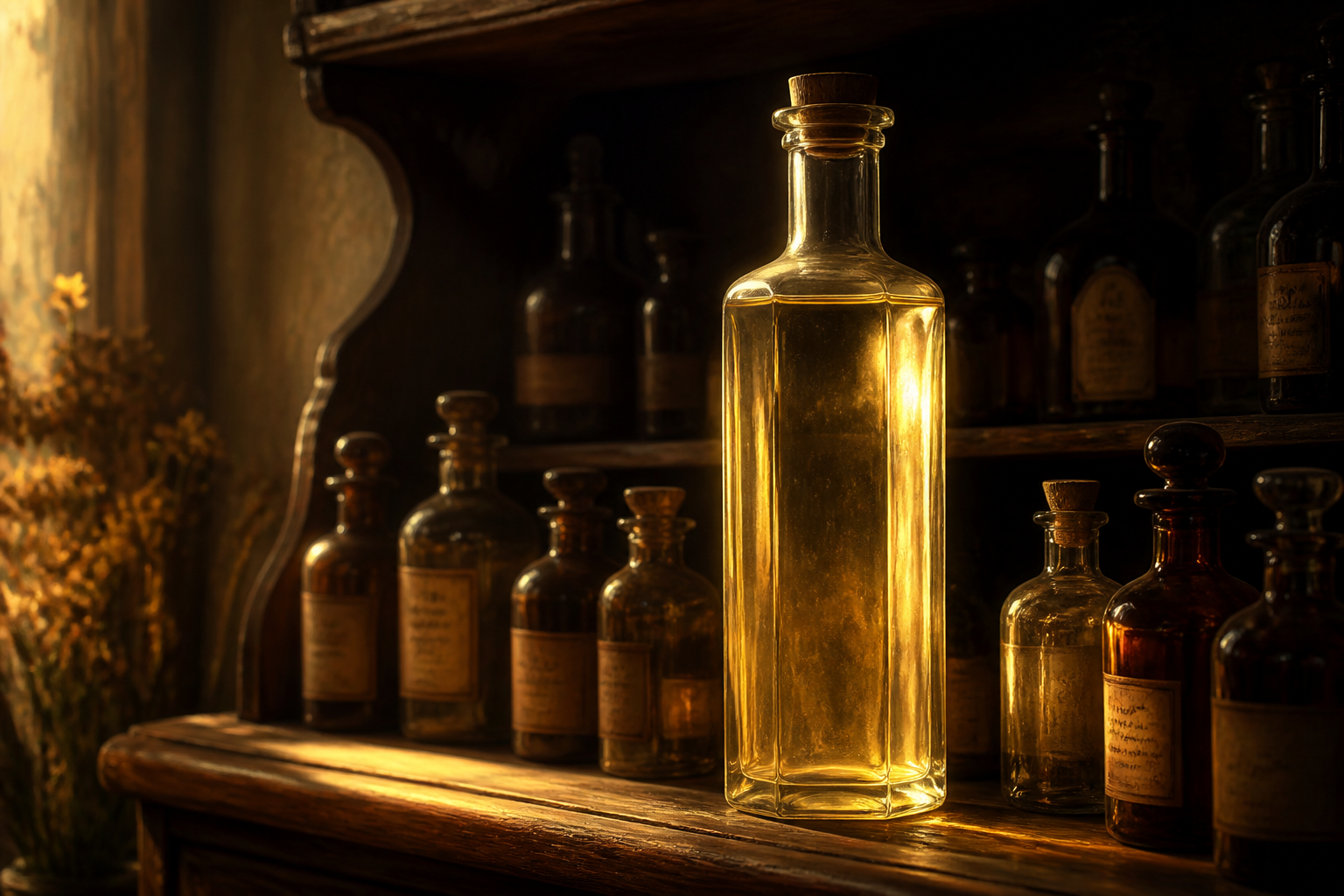
Quintessence (Latin quinta essentia, “fifth essence”) originally named a supposed fifth element — beyond earth, water, air, and fire — believed by ancient and medieval philosophy to compose the heavens and exist, in trace form, within all earthly matter. In the alchemical and spagyric tradition, it became something far more concrete: the most refined, most concentrated, most potent essence extractable from a substance. For plant alchemy specifically, that extractable quintessence is alcohol.
Where the Idea Comes From
Aristotle’s cosmology held that the heavens — the moon, planets, stars — were made of a fifth, incorruptible element called aether. This was distinct from and superior to the four earthly elements, which were all subject to change, decay, and the ordinary rules of corruption. Medieval and Renaissance alchemists inherited this framework and asked a deeply practical question: if the heavens contain a fifth, incorruptible essence, could a trace of it exist hidden inside ordinary earthly matter? Could it be extracted, if you knew the right technique?
That question drove centuries of experimentation. The answer, when it came, arrived through the still.
How Alcohol Became the Answer
Medieval alchemists — the tradition credits figures like Ramon Llull and John of Rupescissa in the 13th and 14th centuries — identified distilled spirit of wine as the closest earthly substance to true quintessence. Their reasoning was elegant and, by their lights, empirical: alcohol doesn’t decay or putrefy the way water, oil, or flesh do. A sealed jar of strong spirit remains stable indefinitely. It resists corruption.
To minds working from Aristotle’s framework, incorruptibility was the signature of the heavenly fifth element. John of Rupescissa wrote a treatise literally titled De Consideratione Quintae Essentiae (“On the Consideration of the Fifth Essence”) arguing that distilled alcohol was this substance made manifest, and he prescribed it as a medicine for exactly that reason — its supposed incorruptible, life-preserving nature. The logic was airtight within its own premises.
Why This Matters for Spagyrics
This is where the history becomes practical — where it speaks directly to what you’re doing at your counter right now. The alcohol used to make a tincture is not, in the spagyric tradition, an inert solvent. It is the philosophers’ Mercury (see below), and by this older reasoning, it is also a quintessence in its own right — already a purified, incorruptible essence before a single herb is added to it.
When that spirit macerates a plant and draws out that plant’s own volatile compounds and active principles, one quintessence is meeting and carrying another. The finished tincture in the jar was, to a Renaissance eye, something far more significant than “herb-flavored alcohol.” It was the marriage of two refined essences — the universal principle of Mercury made visible in alcohol, working on the specific volatile genius of the plant itself.
Quintessence vs. the Philosopher’s Stone
It’s worth noting the parallel and the crucial difference. The Philosopher’s Stone was the goal of mineral alchemy — a fixed, solid, perfected substance representing the culmination of the Great Work. Quintessence was, in a sense, its liquid counterpart in vegetable and universal alchemy — volatile, fluid, a perfected essence rather than a fixed one.
Both represent the same underlying obsession that runs through all hermetic philosophy: finding or making the most refined, most stable, most potent version of a thing. One is solid. One flows. Both are equally real.
At the Mortar
Every time a tincture is started here — when the spirit is poured over muddled herb for the first time — something historically resonant is happening. By five-hundred-year-old reasoning, quintessence is meeting plant. It’s a useful thing to remember the next time “just alcohol” seems like an unglamorous ingredient. It isn’t. It’s the philosophers’ Mercury and a purified essence in its own right, doing exactly what medieval alchemists believed it could do: carrying and concentrating the vital principle of whatever substance it touches.
Related Terms
- Mercury: The Spirit That Binds — the philosophical principle alcohol carries in spagyric theory
- The Philosopher’s Stone — quintessence’s fixed, mineral-kingdom counterpart
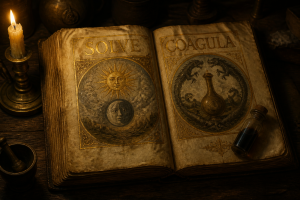
- Solve et Coagula — the operating principle behind extracting any essence, quintessence included
Nothing in this glossary entry constitutes medical advice. Spagyric preparations are experimental products; consult a qualified medical professional before using any plant preparation described here.
Frequently Asked Questions
What is quintessence in the spagyric tradition?
In spagyric plant alchemy, quintessence is the most refined, concentrated, and potent essence extractable from a substance. For plants specifically, that quintessence is alcohol—a purified, incorruptible essence that carries and concentrates the vital principle of whatever plant it touches.
Why did medieval alchemists identify alcohol as quintessence?
Medieval alchemists reasoned that distilled spirit of wine was closest to true quintessence because, unlike water or oil, it doesn’t decay or putrefy. A sealed jar of strong spirit remains stable indefinitely, and this incorruptibility matched Aristotle’s description of the heavenly fifth element, aether.
What is the difference between quintessence and the Philosopher’s Stone?
Both represent the most refined version of a substance, but the Philosopher’s Stone was the fixed, solid goal of mineral alchemy, while quintessence was its liquid counterpart in plant alchemy—volatile and fluid rather than fixed. Both are equally real within hermetic philosophy.
Did John of Rupescissa write about distilled alcohol as quintessence?
Yes. John of Rupescissa, a 14th-century alchemist, wrote a treatise titled De Consideratione Quintae Essentiae arguing that distilled alcohol was the fifth essence made manifest, and he prescribed it as a medicine based on its supposed incorruptible, life-preserving nature.
About This Article

Written by Kyle Bamboo. Kyle Bamboo has spent twelve years following the hermetic tradition of herbalism out of dusty reprints and into a home apothecary — spagyrics, planetary correspondences, and the strange internal logic of plant alchemy. Muddle and Mend takes its name from solve et coagula, dissolve and combine. He writes about the actual tradition, with its history, its vocabulary, and its genuine strangeness, not the Instagram version. More about this site.
Scope and limits. Kyle writes from a personal practice in traditional herbalism, not clinical training. Herbs interact with prescription medications and are not regulated as drugs — check interactions and talk to a pharmacist or clinician before taking anything.
Verify this against a primary source
Specifics change, and your situation may differ from the one described here. These are the authorities worth checking directly:
- NCCIH — herb safety, evidence and known interactions
- MedlinePlus Herbs and Supplements — documented interactions and cautions
- FDA Dietary Supplements — regulatory status and safety alerts