Rue, Ruta graveolens, is the Sun’s fierce herb of protection and bitter repentance—a plant of apotropaic power so ancient that its very name has become a word for sorrow and regret. I hold it among the most formidable and dangerous plants in the garden, a sovereign remedy of the old pharmacy now rightly approached with utmost caution by the living.
Of Its Names and Nature
The plant is known to botanists as Ruta graveolens, of the family Rutaceae, a genus of woody and fleshy-leaved shrubs bearing small, curious yellow flowers. In the common speech it is rue, or the garden rue; in older times, the herbalists named it herb of grace, and herb of repentance—the second name arising from its bitter taste and its long association with contrition and the sorrows of the soul. The Italians knew it as ruta, and wove its image into the cimaruta, that sacred protective amulet worn against the evil eye and the malice of witches.
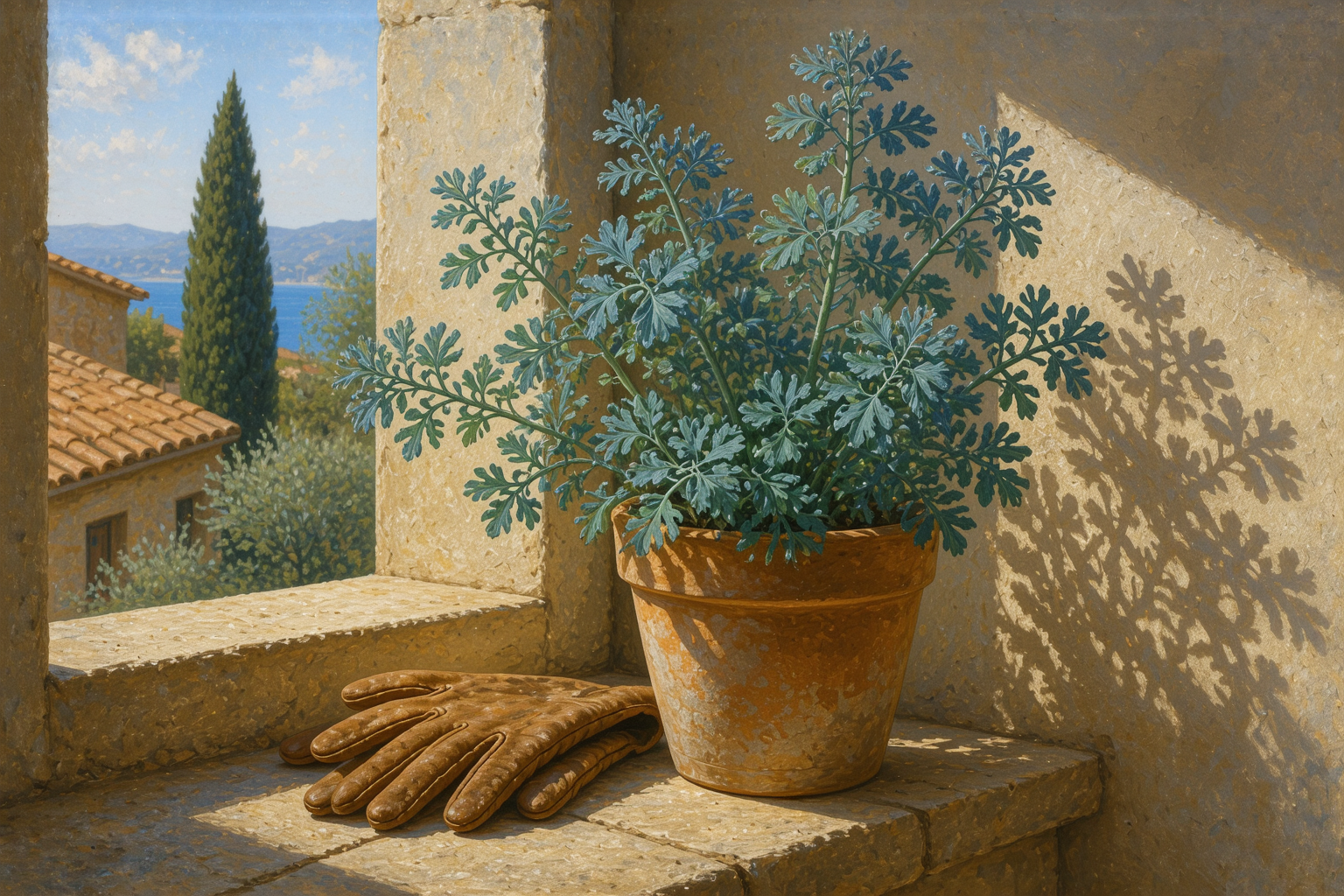
The leaves are the part most prized, fleshy, fine-grained, and strongly aromatic—when bruised, they yield a pungent oil that clings to the fingers and the nostrils alike. Gerard describes the plant as “of a rank and strong smell,” and this is just: the odour speaks to the plant’s power. Rue is ruled by the Sun, that great luminary of health and clarity, and its solar correspondence is confirmed by its warm, dry nature and its ancient use for the strengthening of the sight. Some authorities give it to Mars as well, a division of rule that befits an herb so sharp and defensive.
Of Its Virtues
The old writers were nearly unanimous in praising rue. Dioscorides commended it for cramp and the spasms of the womb; Galen prescribed it as an antispasmodic of great worth. Culpeper held that it “strengthens the sight exceedingly,” and this virtue was not mere theory—Leonardo da Vinci and Michelangelo Buonarroti, those keen-eyed masters, are said to have prized rue for the eyes, taking it to sharpen their vision for the intricate labours of art. The plant was given for “hysteria” and the convulsions of women; for cramp in the belly; for the colic of infants (though this use horrifies the modern reader, as we shall see).
The modern pharmacologist finds in rue’s leaves a wealth of rutin, a bioflavonoid compound, which does indeed strengthen blood vessels and may ameliorate the fragility of capillaries—this much accords with the old claim. Yet the plant harbours also a class of compounds called furanocoumarins, which are phototoxic: they sensitize the skin to ultraviolet light in a manner that can cause severe and blistering burns. Additionally, rue contains quinoline alkaloids and other volatile oils of considerable potency. These constituents account for both its ancient virtues and its grave dangers, and the two cannot be sundered.
I have read that rue was esteemed as a protective wash, sprinkled upon the person and the threshold in times of dread, and that the leaves were worn or carried to ward off the evil eye and the eye of malice. This protective virtue accords well with its solar rulership and its sharpness of smell and taste. But let the reader mark: that which defends the spirit may grievously wound the flesh, if handled without knowledge.
Of Its Shadow
Rue bears a dark and sorrowful weight in the lore of the peoples. In Shakespeare’s Hamlet, Ophelia cries out, “There’s rosemary, that’s for remembrance—pray you, love, remember. And there is pansies, that’s for thoughts… Here’s rue for you, and here’s some for me. We may call it herb of grace o’ Sundays.” The very utterance speaks of loss, of betrayed love, of the bitterness that comes when innocence is shattered.
The herb was known as the supreme defender against witchcraft and the evil eye—a plant to be grown by those who feared malevolent intention. Yet the tradition held, too, that rue itself belonged to the witch’s garden, that it was a plant of secret knowledge and danger. Bundles of rue bound with salt and bay leaves were blessed and kept for apotropaic purposes. In the folklore of Southern Europe, it appears in charms and protective rituals, yet always with an undertone of dread, as though the plant itself embodied both the shield and the sword.
Most grimly, rue earned a dreadful reputation as an abortifacient of terrible efficacy. The old herbals do not shy from mentioning this—Dioscorides notes its power to bring down the menses, and Culpeper, with cautious frankness, observes that it provokes menstruation. In folk practice across Europe and beyond, women in desperate circumstance have used rue in the attempt to end unwanted pregnancies, and the plant’s potency in this regard is real and dangerous beyond measure. Many have died from such attempts; many more have suffered wounding of body and spirit that endured for life. This shadow is not superstition but the record of suffering, and it marks rue as a plant that demands the deepest respect.
Of Its Degree of Poison
Rue is of Degree IV, Perilous—poisonous in quantity, a potent abortifacient, and dangerously phototoxic upon the skin. The furanocoumarins present in the plant’s tissues cause severe phototoxic reactions: when the fresh plant matter touches the skin and is then exposed to sunlight, burns and blistering eruptions appear, sometimes delayed by hours. The quinoline alkaloids and other constituents render the plant poisonous if taken internally in quantity; the abortifacient action is well-documented and grave.
Of Its Preparations
The tradition records many preparations of rue, though the living reader must approach each with extreme caution—or, as shall be made plain, not approach them at all.
- Fresh or dried leaf: Historically worn as a protective sachet, braided into amulets, or scattered as a strewing herb in the home. The dried leaf was sometimes powdered and mixed with salt for protective washes of the threshold and person. A reader may handle dried rue very carefully with gloves, and may keep it as a protective charm; fresh rue must never be handled without protection, and the hands and skin must never be exposed to sunlight after touching it.
- Infusion (leaf steeped in hot water): The old herbals record infusions of rue for cramp and for the eyes. This preparation concentrates the active compounds, including the phototoxic furanocoumarins. The reader must not prepare or drink a rue infusion; the risks of poisoning and phototoxic reaction are extreme and unpredictable.
- Tincture (leaf in spirit): The spirit extraction was used in the tradition for protective purposes and was sometimes rubbed upon the skin or added to wash-water. A traditional practitioner might prepare this with great care; the living reader must not attempt it, and must certainly not ingest it.
- Oil or salve infusion: Rue oil was historically used as a rub for cramps and as a protective ointment. The furanocoumarins remain active in oil. Do not prepare rue-infused oil and do not apply it to the skin, especially if sunlight exposure is likely.
- Bath or wash (dried herb steeped, then added to water): Some bathing rituals involved rue-steeped water for purification or protection. This preparation is unsafe for the reader; the phototoxic compounds and the risk of systemic absorption through the skin make it inadvisable.
- Burning as incense or fumigation: Dried rue was burned in the home for protective purposes, and the smoke was believed to dispel malevolent influences. This use does not carry the phototoxic hazard. The reader may burn dried rue as incense if desired, ensuring good ventilation; the smoke is pungent but not immediately toxic in small amounts.
I must stress with utmost gravity: the furanocoumarins in rue are activated by sunlight and cause severe phototoxic dermatitis. Any handling of fresh rue requires gloves, and the hands must be washed thoroughly before any exposure to sun. The old practice of using rue for internal complaints—cramp, abortion, the strengthening of sight—belongs to the historical record and to the trained herbalist of old, not to the reader of these pages.
A Word to the Living
This entry is historical and folkloric information only. It is not medical advice.
Rue is dangerous. Do not ingest it. The plant contains furanocoumarins that cause severe, blistering phototoxic burns on skin that is then exposed to sunlight—burns that can appear hours after contact and cause scarring. It is a potent abortifacient and uterotoxin; if you are pregnant, trying to become pregnant, or suspect pregnancy, you must not touch rue or use any preparation of it. The plant is poisonous in quantity; ingestion can cause vomiting, abdominal pain, kidney damage, and death.
If you wish to grow rue as a protective plant or for its folklore significance, wear nitrile gloves when handling fresh material, wash your hands thoroughly, and avoid sunlight exposure afterward. Keep dried rue away from children and pets. Do not prepare infusions, tinctures, or oils of rue for internal use under any circumstances. If you have ingested rue or experienced a phototoxic reaction, seek emergency medical attention immediately and tell your doctor exactly what plant material you encountered.
Consult a qualified herbalist or physician before using any herbal preparation, especially one with a long history of toxicity like rue. This entry is a scholarly record of traditional use and is not a guide to self-treatment.
Frequently Asked Questions
Why is rue called the herb of grace?
In older times, herbalists named rue both herb of grace and herb of repentance. The second name arose from its bitter taste and its long association with contrition and the sorrows of the soul. Shakespeare’s Hamlet also links rue to loss and betrayal, deepening its connection to sorrow and regret.
What planetary correspondence does rue hold?
Rue is ruled by the Sun, that great luminary of health and clarity. Its solar correspondence is confirmed by its warm, dry nature and its ancient use for the strengthening of sight. Some authorities give it to Mars as well, a division of rule befitting an herb so sharp and defensive.
What did Leonardo da Vinci use rue for?
Leonardo da Vinci and Michelangelo Buonarroti, those keen-eyed masters, are said to have prized rue for the eyes, taking it to sharpen their vision for the intricate labours of art. This accords with Culpeper’s claim that rue “strengthens the sight exceedingly.”
What are furanocoumarins and why are they dangerous?
Furanocoumarins are phototoxic compounds present in rue’s tissues that sensitize the skin to ultraviolet light in a manner that can cause severe and blistering burns. When fresh plant matter touches the skin and is then exposed to sunlight, burns and blistering eruptions appear, sometimes delayed by hours.
About This Article

Written by Kyle Bamboo. Kyle Bamboo has spent twelve years following the hermetic tradition of herbalism out of dusty reprints and into a home apothecary — spagyrics, planetary correspondences, and the strange internal logic of plant alchemy. Muddle and Mend takes its name from solve et coagula, dissolve and combine. He writes about the actual tradition, with its history, its vocabulary, and its genuine strangeness, not the Instagram version. More about this site.
Scope and limits. Kyle writes from a personal practice in traditional herbalism, not clinical training. Herbs interact with prescription medications and are not regulated as drugs — check interactions and talk to a pharmacist or clinician before taking anything.
Verify this against a primary source
Specifics change, and your situation may differ from the one described here. These are the authorities worth checking directly:
- NCCIH — herb safety, evidence and known interactions
- MedlinePlus Herbs and Supplements — documented interactions and cautions
- FDA Dietary Supplements — regulatory status and safety alerts