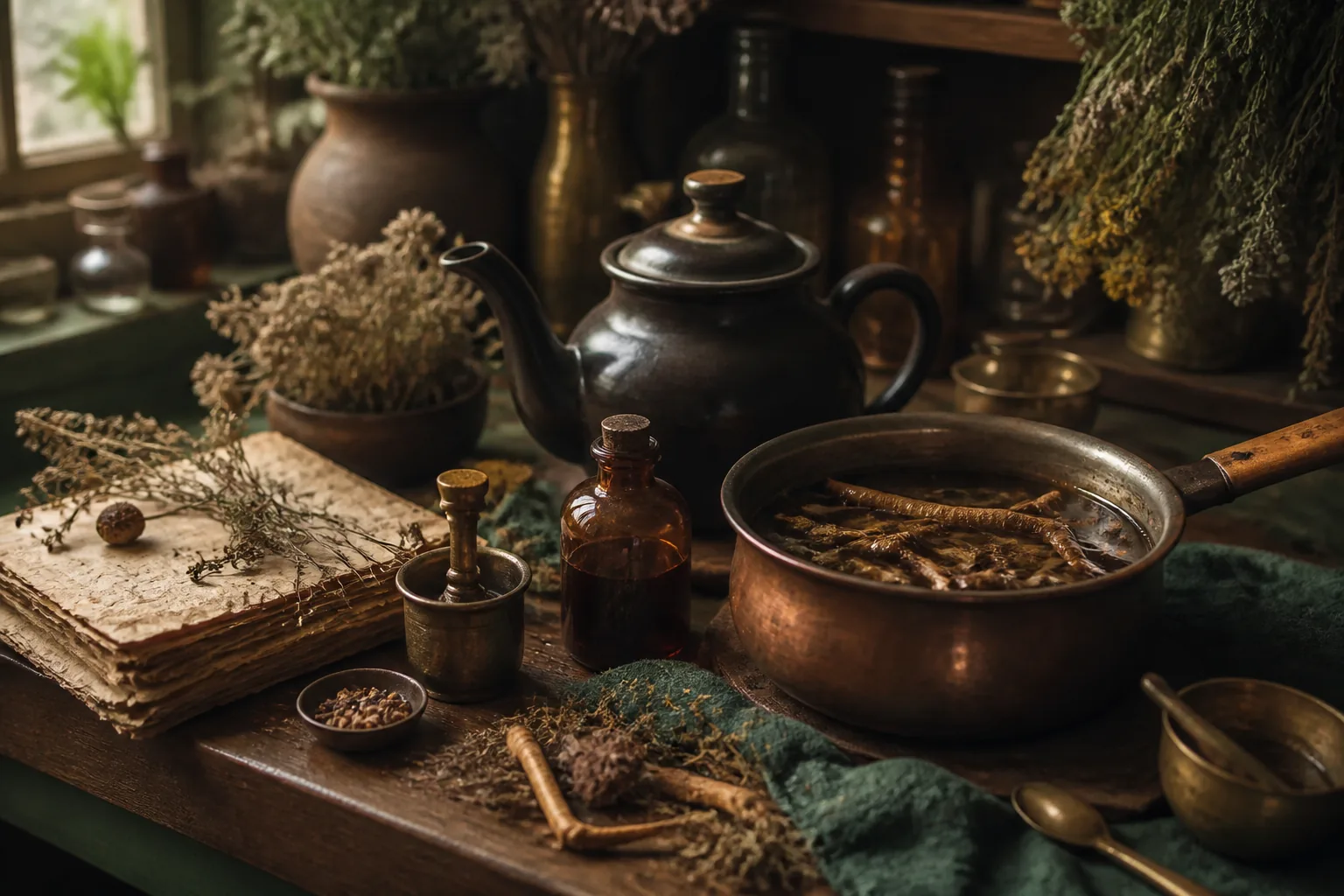
Pick up a piece of dried valerian root. Smell it. That wet-earth, almost rotten funk is valerianic acid, and it does not care how politely you ask it to dissolve in water. You can steep that root in a cup of boiling water for twenty minutes and get a pale, faintly bitter tea that carries maybe a third of what the root actually contains. The rest stays locked in the woody matrix, indifferent to your hot water, waiting for something stronger. Ethanol will take it. Ethanol will reach into the cells and pull out what water cannot touch. That is not a preference. That is chemistry, and the craft tradition knew it centuries before we had the language of molecular polarity to explain why.
The choice between a tincture, an infusion, and a decoction is not aesthetic. It is not about tradition versus modernity, or gentleness versus aggression. It is about matching your solvent to the chemistry of the plant material in front of you — and understanding that the plant does not care about your method. The method has to serve the plant. Getting that wrong means wasted material, wasted time, and an extract that underperforms the tradition you are trying to honor.
What follows is a practical decision framework built from the craft tradition. It draws on principles codified by figures like Paracelsus in the sixteenth century, refined in texts like John Quincy’s Pharmacopoeia Officinalis of 1718, and still legible in the British Herbal Pharmacopoeia’s ratio guidelines. No therapeutic claims are made here. These are extraction techniques. Before you ingest anything, consult a qualified practitioner. Some of the plants named below have real toxicity concerns, and I will say so plainly when we get there.
Water: The Universal Solvent That Is Not Universal
Water is the oldest solvent in the tradition. It is also the most misunderstood, because calling it universal is technically true at the cosmic scale and practically misleading at the bench. Water extracts: polysaccharides, mucilages, tannins, some alkaloids, water-soluble glycosides, and most mineral salts. It does not extract: resins, volatile oils at any useful concentration, or the fat-soluble constituents that make certain roots and barks interesting. If your plant material is predominantly resinous — think myrrh, benzoin, or the gum resins broadly — hot water will give you a film on the surface and a disappointed afternoon.
Water extractions divide into two methods based on one variable: whether you apply heat during steeping or before it.
Infusion: Heat Once, Then Step Back
An infusion is made by pouring already-boiling water over plant material and steeping without further heat. It is the correct method for aerial parts — leaves, flowers, soft stems — where prolonged heat would drive off volatile aromatics before they can be captured. Ratio: 1 part dried herb to 20 parts water by weight (1:20) is the classical British standard. Steeping time matters more than most people allow: five minutes gives you color; fifteen gives you extraction; thirty begins to extract excessive tannin and turns most infusions bitter and astringent. Cover your vessel while it steeps. Volatile oils escape with steam. This is not optional.
Decoction: Sustained Heat for Hard Material
A decoction applies continuous simmering heat — not a rolling boil, a simmer, roughly 90–95°C — for an extended period. This is the method for roots, barks, seeds, and woody material: structures where the constituents you want are locked behind lignified cell walls that hot water alone cannot breach. You have to drive the solvent into the material by sustained thermal pressure. Standard timing in the tradition runs from twenty minutes to forty-five minutes depending on the density of the material. Ratio: 1:20 by weight again, but account for evaporative loss — start with more water and reduce to your target volume. Marshmallow root is the classic exception: its mucilage is best extracted in cold water over several hours, because heat degrades it. Know your plant before you apply your method.
Ethanol: The Spagyric Solvent
Paracelsus called alcohol the menstruum universale — the universal solvent — and while that is also an overstatement, it is a more forgivable one. Ethanol extracts nearly everything water does, plus resins, volatile oils, most alkaloids, and a range of fat-soluble compounds that water simply ignores. It also preserves. A well-made tincture at sufficient alcohol concentration is shelf-stable for years in a way that no water extraction is. The trade-off is cost, regulatory complexity in some jurisdictions, and the fact that alcohol percentage matters enormously and most modern makers treat it as an afterthought.
The critical variable is the ethanol-to-water ratio in your menstruum. High-proof spirits — 95% ethanol, if you can source food-grade — are required for resins and gum-resins. For most roots and dried herbs, 60–70% ethanol is the working standard in the pharmacopoeial tradition: high enough to extract a broad range of constituents, dilute enough that water-soluble compounds come along too. Fresh plant material needs higher alcohol because the plant’s own water content will dilute your menstruum: if you tincture fresh lemon balm at 45% alcohol, you will end up with an extract closer to 30% once the plant water equalizes. This is how tinctures go moldy. The folk-medicine shortcut of using commercial 40% vodka is functional for many dried herbs and almost certainly insufficient for fresh plant material or resinous drugs.
Ratios and Timing for Tinctures
The British Herbal Pharmacopoeia and its successors express tincture strength as a ratio of starting material to final extract volume. A 1:5 tincture means 1 gram of dried herb per 5 ml of finished tincture — the standard for most non-potent herbs. A 1:3 reflects a stronger extract, appropriate for roots with dense chemistry. A 1:10 is a weaker preparation used for potent drugs where you need fine control. Maceration time in the folk and spagyric tradition runs four to six weeks at minimum for dried material, with daily agitation. The Pharmacopoeia allows percolation — a slower drip method — to shorten this, but maceration done properly extracts fully and requires nothing but patience and a sealed jar kept from direct light.
A note of plain caution: some of the most historically important tincture herbs are genuinely dangerous. Aconite, used in classical preparations and still referenced in older texts, is acutely toxic at small doses. Digitalis likewise. The tradition worked with these materials under conditions of serious expertise and significant risk. If a plant appears in the historical record under a warning — and many do — take that warning as written, not as atmosphere.
The Decision in Practice
Set the plant material in front of you and ask three questions in sequence.
First: What part of the plant is this? Leaves and flowers go to infusion. Roots, barks, and seeds go to decoction or tincture. Fresh aerial material in large quantity — where the volatile fraction is the point — goes to a high-proof tincture made fast, before oxidation strips what you came for.
Second: What are you trying to move? Mucilage stays in water. Resins need ethanol and usually high-proof ethanol. Tannins extract readily in both but over-extract with prolonged heat. Alkaloids split depending on their specific solubility; do the research on your specific plant before you assume.
Third: What do you need the extract to do in terms of shelf life and concentration? A water extract is perishable: use it within twenty-four to forty-eight hours or it becomes a culture medium. A tincture at appropriate proof is stable. If you are making something to sit in a dispensary bottle for six months, alcohol is not optional.
- Dried leaf or flower → infusion, 1:20, 15 minutes, covered vessel
- Dried root or bark → decoction, 1:20, 20–45 minutes at simmer, or tincture 1:5 at 60% ethanol
- Fresh aerial herb → tincture, 1:3 or 1:2, 70–80% ethanol to account for plant water
- Gum resin → tincture, 1:5, 90%+ ethanol
- Mucilaginous root (marshmallow, slippery elm) → cold infusion, 1:20, 4–8 hours
The tradition did not invent these distinctions to make the work seem complicated. It invented them because getting the extraction wrong produces an inferior product — or in some cases, a dangerous one. Solve et coagula means knowing what you are dissolving before you begin, and understanding what you are putting back together before you call it finished. The plant has already done its work. The question is whether your method is worthy of meeting it.
Worth having on hand: a gram-accurate digital kitchen scale — the 1:5, 1:20, and other ratios above are only as reliable as your weighing.
Frequently Asked Questions
Why does valerian root need alcohol instead of hot water?
Valerianic acid and similar compounds in valerian root do not dissolve readily in water due to their chemical polarity. Hot water steeping for twenty minutes extracts only about a third of the root’s constituents. Ethanol reaches into cells and pulls out what water cannot touch, making it the appropriate solvent for this plant’s chemistry.
What is the correct steeping time for an infusion?
Five minutes produces color; fifteen minutes achieves proper extraction. Beyond thirty minutes, infusions begin extracting excessive tannin, becoming bitter and astringent. The vessel must remain covered during steeping because volatile oils escape with steam, and this is not optional.
How long should fresh plant material macerate in alcohol?
Maceration in the folk and spagyric tradition requires four to six weeks at minimum for dried material, with daily agitation. Fresh plant material needs higher alcohol concentration—70–80% ethanol—because the plant’s own water content dilutes the menstruum; using 40% vodka risks the extract becoming moldy.
Why does marshmallow root need cold water instead of heat?
Marshmallow root is a classic exception to standard decoction practice because sustained heat degrades its mucilage, the constituent worth extracting. Cold water over four to eight hours preserves the mucilage and extracts it effectively without damage.
About This Article

Written by Kyle Bamboo. Kyle Bamboo has spent twelve years following the hermetic tradition of herbalism out of dusty reprints and into a home apothecary — spagyrics, planetary correspondences, and the strange internal logic of plant alchemy. Muddle and Mend takes its name from solve et coagula, dissolve and combine. He writes about the actual tradition, with its history, its vocabulary, and its genuine strangeness, not the Instagram version. More about this site.
Scope and limits. Kyle writes from a personal practice in traditional herbalism, not clinical training. Herbs interact with prescription medications and are not regulated as drugs — check interactions and talk to a pharmacist or clinician before taking anything.
Verify this against a primary source
Specifics change, and your situation may differ from the one described here. These are the authorities worth checking directly:
- NCCIH — herb safety, evidence and known interactions
- MedlinePlus Herbs and Supplements — documented interactions and cautions
- FDA Dietary Supplements — regulatory status and safety alerts