Verbena officinalis, the sacred herb of Venus—a gentle yet profound restorer of the worn nerve, the melancholic spirit, and the exhausted breast. I set down here what the old authorities and my own years of study have shown of this plant’s nature and use.
Of Its Names and Nature
The learned call this plant Verbena officinalis, of the family Verbenaceae, though it has worn many names across the centuries and the tongues of Europe. The herbalists of old knew it as herba sacra—the sacred herb—and as enchanter’s plant, Juno’s tears, and herb of grace. In the simpler’s garden it goes by vervain or vervain, a name some hold derives from the Celtic ferfaen, meaning “to drive away stone,” though I confess the root remains obscure to me. The whole herb above ground—leaf, flower, and stem gathered together—is the part we take to use.
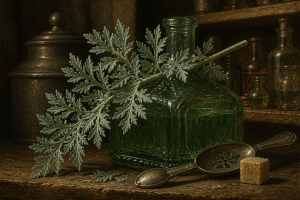
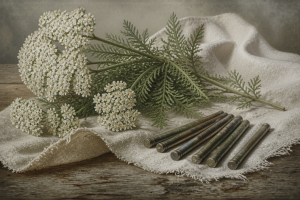
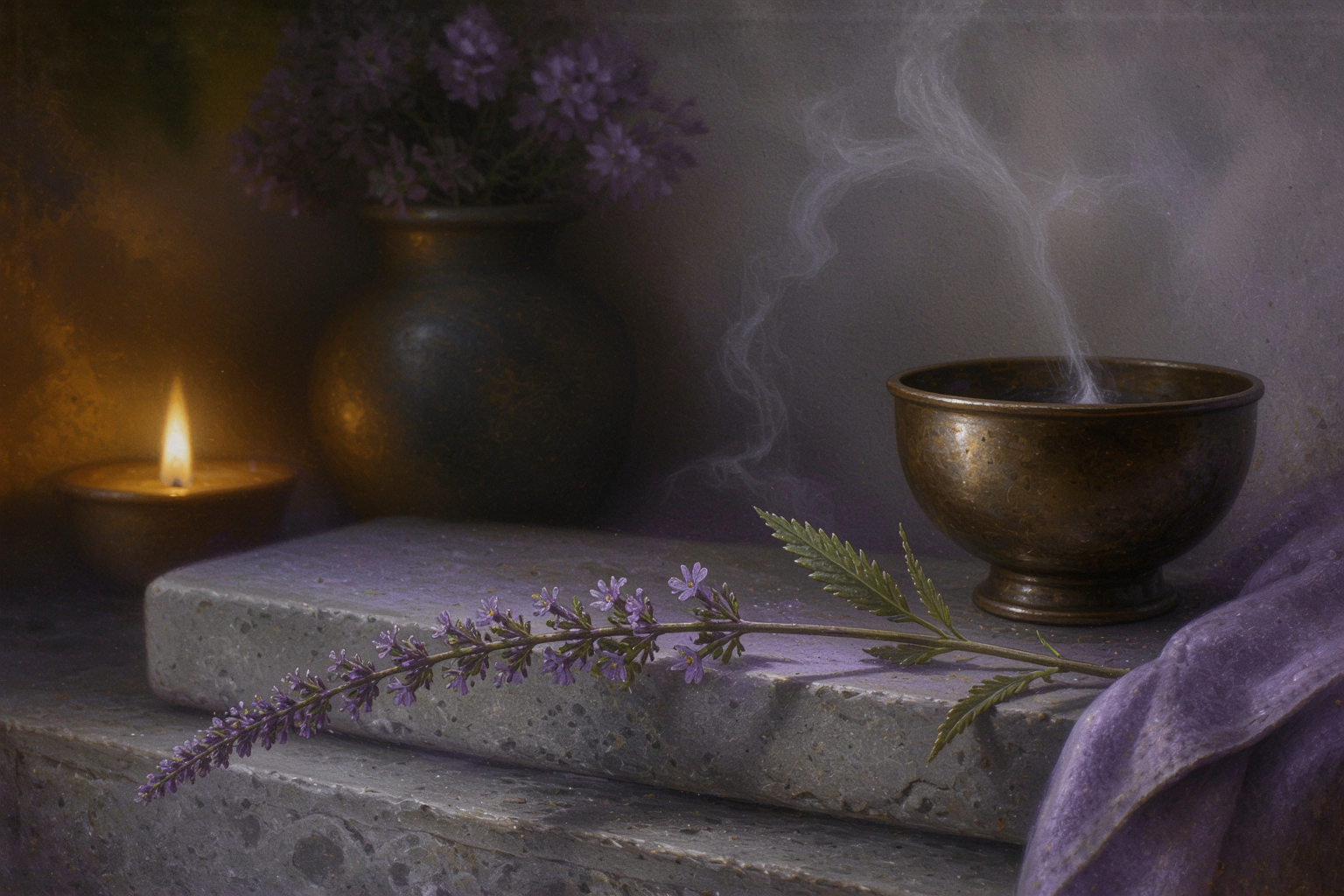
The plant itself stands modest in the field: a slender, angular stem, branched and somewhat rough, bearing small opposite leaves that are lance-shaped and coarsely toothed, and flowers of pale lilac or whitish hue, arranged in thin spikes. It blooms throughout the summer and into autumn, and a keen eye will find it along roadsides, in waste ground, and in the margins of cultivation. Venus rules this herb, and indeed, if one studies the doctrine of signatures, the slender, reaching form—stretching upward as if in longing—speaks of the Venusian gift for reaching across distance and drawing things to union. The herb’s slight, almost unassuming nature belies the weight of reverence the ancients held for it.
Of Its Virtues
Dioscorides, that most careful observer, praised vervain for its power to “make glad the heart” and to mend wounds, and Pliny catalogued it among the plants most precious to the temple and the household. Culpeper held it warm and dry in the second degree, and noted its special virtue in cases of melancholy, weakness of the nerves, and the exhaustion that follows grave illness. Where the old writers spoke of “strengthening the nerves” and “reviving the spent spirit,” we may now understand them to mean the plant’s action as a nervine bitter—a gentle tonic for the nervous system when depleted and frayed.
The modern investigator finds in vervain the iridoid glycosides—notably verbenalin and verbenin—alongside a delicate volatile oil. These compounds appear to confer upon the herb a mild bitter and relaxing action on the digestive organs, making it useful in cases of nervous indigestion and tension that settles in the belly. The tradition also marks vervain as a galactagogue, a promoter of milk in the nursing mother, though I confess that evidence for this action remains slender. Where strong fever attends, the old herbalists gave vervain in warm infusion to promote a gentle sweat and to ease the body’s labour.
The plant shines most brilliantly, I have found, in those cases where melancholy and exhaustion walk together—the mind worn thin, the body depleted, yet without fever or acute disease. A course of vervain tea taken over weeks will often restore a certain brightness to the eye and steadiness to the hand. Let the reader mark that this is no swift heroic action, but the slow, humble work of a true restorative.
Of Its Shadow
No herb in the Western tradition carries so strange and solemn a weight of taboo and reverence as vervain. The Druids of the Celtic lands held it sacred above almost all other plants, and Pliny records—with a solemnity that suggests deep belief—that they gathered it only when neither sun nor moon was visible in the sky, and that they made offerings of honeycomb to the earth before cutting it with iron. The rite itself was the plant’s due; to gather it carelessly, without ceremony, was thought to rob it of its virtue and to invite the displeasure of unseen powers.
In Rome, vervain swept the altars of Jupiter and other gods; it was the herb of purification and blessing. Yet Christianity did not diminish its sacred charge. The medieval Church held that vervain had been found upon the cross of Christ, staunching His wounds—hence one of its old names, herba crucis. A legend widespread in Europe told that the herb was steeped in the blood of Christ at Calvary. This mingling of the pagan sacred and the Christian holy speaks to the deep thread vervain held through the imagination of the West.
But with the sacred came the dangerous. Vervain became also the enchanter’s plant—a tool of charms and love-workings, and in some accounts, of witch-craft. Medieval grimoires name it among the herbs gathered for protection, for binding, for compelling love, and for warding away malice. The plant thus lived a double life: the temple-herb and the sorcerer’s wand. This shadow—the weight of taboo, the danger of using a sacred thing carelessly or for base purposes—may be what the tradition truly feared. To gather vervain wrongly, with the wrong mind, was thought to be worse than useless; it was spiritually perilous. This is not poison in the body, but poison in the intention.
Of Its Degree of Poison
Degree II — Temperate. Vervain is safe in the doses and preparations of ordinary herbal use, yet it is not wholly without caution. It bears a mild emmenagogue tendency (that is, it can stimulate the menses), and in large or prolonged doses the bitter principle may prove griping or overstimulating to a sensitive digestive system.
Of Its Preparations
Vervain yields its virtues most readily to hot water, and an infusion is the form I have found most useful in practice. Choosing the right extraction shapes the outcome considerably; here, the gentle heat of an infusion draws the bitter and nervine principles without harshness.
- Infusion (steeped tea): This is the sovereign preparation. Steep one teaspoon of dried herb per cup of freshly boiled water, covered, for ten to fifteen minutes. The result is pale gold and faintly bitter—take it warm, once or twice daily, over weeks to feel the restoring effect. This is the form the old herbalists favored for melancholy and convalescence.
- Tincture: Vervain takes well to spirit maceration. A 1:5 ratio of dried herb to 45% alcohol, macerated for two to three weeks, yields a clear amber liquid of good keeping. This concentrates the bitter principles and suits those who wish a smaller dose or longer shelf-life.
- Oil infusion and salve: Fresh vervain laid in warm oil (or macerated in fat over gentle heat) makes a soothing salve for wounds that are slow to heal or that carry a nervous dimension. This was a valued application in older practice.
- Wash or fomentation: A strong infusion cooled and applied as a compress to wounds or to areas of nervous tension has long held a place in folk practice. Some herbalists gave it as a rinse for the mouth and throat in cases of soreness or weakness.
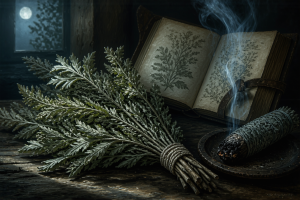
- Dried and carried or worn: The old tradition held that dried vervain kept in the home or carried on the person conferred blessing and protection. Whether this is a work of imagination or of some subtle herbaceous influence, I do not presume to say—but the practice harms no one and many have found comfort in it.
- Incense: Vervain may be dried and burned as incense, particularly as part of a seasonal or spiritual observance. The smoke is mild and carries a faint herbal scent.
I do not recommend a decoction, as the prolonged simmering of so delicate a plant tends to scatter its volatile oils and to intensify the bitter in ways that prove unpleasant. Fresh vervain, though it bears less keeping power, may be used in any of these preparations, but dried herb is steadier and more reliable for long storage.
Those drawn to spagyric work may also calcine vervain to its salt, thus isolating the mineral virtue and transmuting the plant into the principle of salt—the fixed and stable essence. Such work is an art, and deserves its own study.
A Word to the Living
This entry is historical and folkloric. It is not medical advice. Do not self-treat with vervain or any herb.
Vervain is generally mild and well-tolerated in the amounts used for tea. However, it should be avoided in pregnancy and while breastfeeding, since it can stimulate uterine contractions and may affect milk composition. If you take medications for blood pressure or hormone-related conditions (including birth control), speak to your doctor or pharmacist before using vervain regularly, as bitter herbs can sometimes interact with these drugs.
Anyone with a history of miscarriage, a current pregnancy, or a hormone-sensitive condition should not use this herb without explicit guidance from a qualified medical or herbal practitioner. If you experience any unusual symptoms—digestive upset, rash, or others—stop use and seek advice.
The folklore and ritual uses described above are offered as ethnographic record. They are not medical treatments. If you are struggling with melancholy, exhaustion, or nervous illness, see a qualified healthcare provider. Herbs can support wellbeing, but they are not substitutes for proper diagnosis and care.
Frequently Asked Questions
Why did Druids gather vervain only at night?
According to Pliny’s account, the Druids of the Celtic lands gathered vervain only when neither sun nor moon was visible in the sky, and made offerings of honeycomb to the earth before cutting it with iron. They believed that gathering it carelessly, without ceremony, would rob it of its virtue and invite displeasure of unseen powers.
What are the active compounds found in vervain?
Modern investigation finds in vervain the iridoid glycosides—notably verbenalin and verbenin—alongside a delicate volatile oil. These compounds appear to confer upon the herb a mild bitter and relaxing action on the digestive organs.
What did Culpeper say about vervain’s temperature?
Culpeper held vervain warm and dry in the second degree, and noted its special virtue in cases of melancholy, weakness of the nerves, and the exhaustion that follows grave illness.
How long should vervain infusion steep before drinking?
Steep one teaspoon of dried herb per cup of freshly boiled water, covered, for ten to fifteen minutes. The result is pale gold and faintly bitter, best taken warm once or twice daily over weeks.
About This Article

Written by Kyle Bamboo. Kyle Bamboo has spent twelve years following the hermetic tradition of herbalism out of dusty reprints and into a home apothecary — spagyrics, planetary correspondences, and the strange internal logic of plant alchemy. Muddle and Mend takes its name from solve et coagula, dissolve and combine. He writes about the actual tradition, with its history, its vocabulary, and its genuine strangeness, not the Instagram version. More about this site.
Scope and limits. Kyle writes from a personal practice in traditional herbalism, not clinical training. Herbs interact with prescription medications and are not regulated as drugs — check interactions and talk to a pharmacist or clinician before taking anything.
Verify this against a primary source
Specifics change, and your situation may differ from the one described here. These are the authorities worth checking directly:
- NCCIH — herb safety, evidence and known interactions
- MedlinePlus Herbs and Supplements — documented interactions and cautions
- FDA Dietary Supplements — regulatory status and safety alerts