I am not a Freemason. I say this plainly at the start because what I’m about to describe comes from the published record—Albert Mackey’s Encyclopedia of Freemasonry, grand lodge ceremonial guides printed for public purchase, and two centuries of historical archive. I read these texts as a herbalist and plant alchemist reads any craft tradition: looking for the grammar of materials, the logic of transformation, the tools another trade has sharpened on the same stone I sharpen mine on.
What caught my eye was a ceremony performed in daylight, in front of crowds, on the steps of courthouses and capitols. A ceremony old enough to have George Washington at the trowel in 1793, laying the cornerstone of the U.S. Capitol. A ceremony where substances are poured onto stone with words and intention. When an alchemist watches that, he sees something the spoken ritual language doesn’t name.
The Stone Receives Three Things
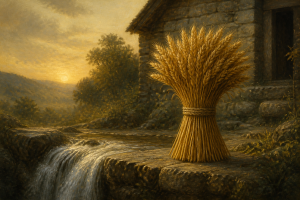
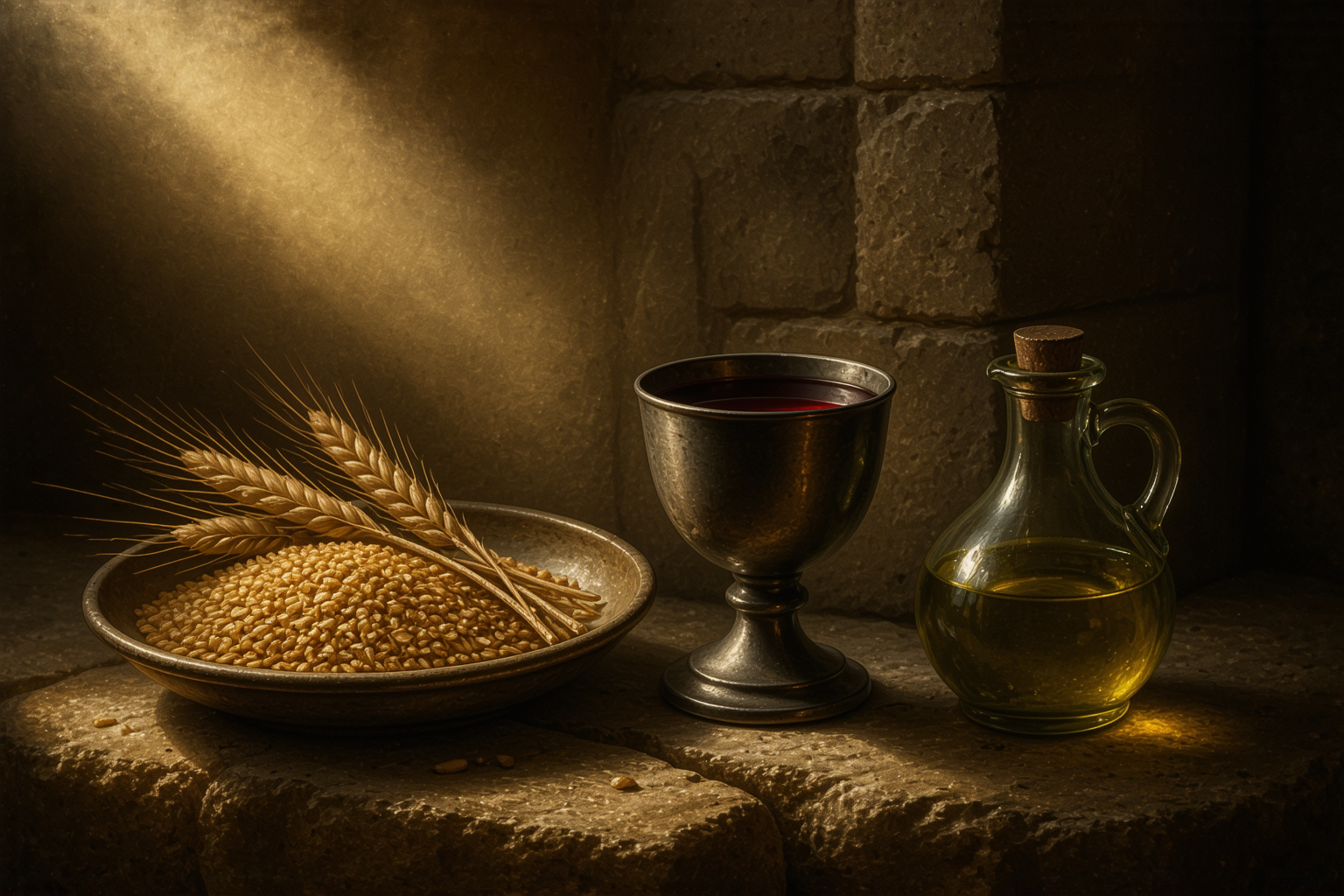
The cornerstone ceremony is Masonry’s most public rite. No secrets kept from the gathered crowd. A grand master, with the lodge officers standing in their stations, approaches the stone with three vessels. Corn is poured first—whole grain, gold and heavy, speaking nourishment, abundance, the plenty that keeps a people alive. Wine follows, red or white, and the words say refreshment, health, the restorative that steadies the hand and clears the mind. Oil comes last, aromatic and luminous, and it speaks joy, peace, the comfort of a good anointing.
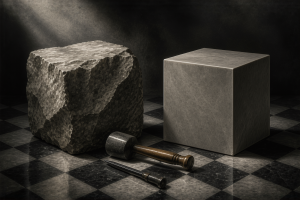
Three substances. Three meanings. Poured onto a foundation stone that will hold a building for centuries. The ritual is ordered and formal—the trowel is used, the level is consulted, nothing is left to chance. But the substances themselves carry a logic older than Freemasonry, older than the lodges that crystallized in 1717. The logic is Mediterranean. It is temple-old.
What the Masonic Record Says
I want to be exact here. The Masonic sources I’ve read do not call these the tria prima. They do not claim alchemical language. The official gloss is straightforward: nourishment, refreshment, joy. These are the meanings the lodge officers speak aloud. No hidden layer is claimed. The sources I trust do not invite decoding; they invite participation in a ritual of consecration.
But I cannot unsee what my years in the laboratory have shown me. Corn is grain. Grain is the fixed body—it calcines to ash, to mineral, to salt. Wine is spirit in the literal sense; distilled wine gave alchemy the term “spirit of wine” itself, and from that came quintessence, the fifth essence that dissolves and recombines all principles. Oil is aromatic, fatty, the soul in scent—the principle that carries intention through scent and touch. Body, spirit, soul. The tria prima. Poured onto stone.
A Common Inheritance
Here is what I think is true: both the lodge and the laboratory inherited their language from the same older source. Corn, wine, and oil are not arbitrary. They are THE Mediterranean triad of offerings—the three staple gifts of first-fruits that appear in the Hebrew Bible, in Greek temple practice, in Roman ritual. They sustained life. They were precious. When you offered them to something greater than yourself, you offered what you lived by.
The lodge poured them onto a cornerstone because cornerstones matter. A building’s foundation is its pledge to endure. You consecrate it with what sustains: nourishment, refreshment, joy. The substances chosen were not poetic accident. They were the substances a civilization knew. And they are the same three substances an alchemist reaches for when building a spagyric formula—the body and the spirit and the soul, unified and fixed into a medicine.
Salt, Mercury, Sulfur: The Alchemist’s Reading
In my bench work, I have learned to see the tria prima in every mature plant extract. Salt—the body and the white ash—is what remains when fire has done its work. Grain calcines to mineral, to the fixed principle. It does not flee. It stays, it holds weight, it grounds.
Mercury—the spirit that binds—is movement itself. Distilled wine is the capture of this principle: it rises in vapor, it penetrates, it dissolves what was solid. The word “spirit” in alchemy literally means the alcoholic quintessence. Wine is the menstruum, the medium through which transformation happens.
Sulfur—the soul in the scent—is the aromatic and fatty principle. It carries intention. It lingers on skin and cloth. It is why we know oil has touched us. In spagyric work, it is often the last principle recovered, the most volatile and most precious.
The Laboratory Performs What the Lodge Consecrates
When I began working with spagyric preparations in earnest, I realized I was doing something the cornerstone ceremony had already named. Every finished formula reunifies corn, wine, and oil in one vessel. The process mirrors the ritual exactly, but the work is hidden from public view.
Menstruum matters. The choice of solvent—often grain alcohol—is not decorative. It is the spirit that pulls apart the fixed body, that carries the volatile principles into suspension. Wine and grain, again: the laboratory reaches for what the temple knew.
Infused oils carry the Sulfur principle—the aromatic and fatty essence that makes a salve alive, that makes it penetrate skin, that makes it work. A good oil infusion is patient work, timed to the plant’s nature, intended to capture soul-work in a bottle.
Plant ash—the calcined salt—is recovered from the remaining matter. It is mineral, it is heavy, it is what refuses to burn away. It is the body resurrected as powder, ready to be reunified with spirit and soul.
One Bottle Holds What Three Substances Began
A finished spagyric preparation, when all three principles are recombined, contains corn, wine, and oil in their transformed state. The grain has become its essential mineral. The wine has become its concentrated spirit. The oil has become its aromatic quintessence. Poured together, they do what the cornerstone ceremony intended: they consecrate matter with intention. They mark a foundation. They say: this work is built on what sustains.
Why I Set Up My Bench This Way
I do not claim to know what the lodge keeps private. I do not pretend to decode the Craft. I read what is published, what is performed in daylight, what two hundred years of printed record has opened to scrutiny. And from that honest reading, I have learned something about my own work.
When I now christen a new workbench—and I do christen it, with intention—my instinct is to pour the first tincture made at that station. Grain spirit, plant-gathered, a small amount into the wood grain. Not because any tradition told me to, but because I recognized what I was already doing. Every craft marks a foundation with the substances it lives by. The lodge uses grain, wine, and oil because these are what a civilization knows. The laboratory uses them because these are what a plant gives up when questioned rightly.
Consecration is intention made physical. It says: this ground is set apart for work. It says: these materials matter. It says: what I build here will be built on what sustains. The cornerstone ceremony and the spagyric bench are two ways of naming one recognition. And I understand both better for having read the other.
Frequently Asked Questions
What three substances are poured in a Masonic cornerstone ceremony?
Corn is poured first, wine second, and oil third onto the foundation stone. The ritual speaks of corn as nourishment and abundance, wine as refreshment and health, and oil as joy and peace. This ceremony appears in public on courthouse and capitol steps, with records showing George Washington at the trowel in 1793 at the U.S. Capitol.
How do spagyric principles relate to corn, wine, and oil?
In this tradition, corn corresponds to salt—the fixed body that calcines to ash and mineral. Wine corresponds to mercury—the spirit that dissolves and transforms. Oil corresponds to sulfur—the aromatic, fatty soul-principle that carries intention. A finished spagyric preparation reunifies these three transformed principles in one vessel.
Why were corn, wine, and oil chosen for temple offerings?
These three substances formed the Mediterranean triad of first-fruits offerings in Hebrew, Greek, and Roman ritual. They were the staples that sustained civilization and were precious enough to offer to something greater than oneself. Their selection was not poetic accident but rooted in what a culture lived by.
What does the author mean by the tria prima in plant alchemy?
The tria prima—salt, mercury, sulfur—are the three principles recovered in spagyric work. Salt is the mineral residue from calcination. Mercury is the distilled spirit (often grain alcohol) that acts as solvent and medium. Sulfur is the aromatic and fatty oil principle, often the last and most precious element recovered.
About This Article

Written by Kyle Bamboo. Kyle Bamboo has spent twelve years following the hermetic tradition of herbalism out of dusty reprints and into a home apothecary — spagyrics, planetary correspondences, and the strange internal logic of plant alchemy. Muddle and Mend takes its name from solve et coagula, dissolve and combine. He writes about the actual tradition, with its history, its vocabulary, and its genuine strangeness, not the Instagram version. More about this site.
Scope and limits. Kyle writes from a personal practice in traditional herbalism, not clinical training. Herbs interact with prescription medications and are not regulated as drugs — check interactions and talk to a pharmacist or clinician before taking anything.
Verify this against a primary source
Specifics change, and your situation may differ from the one described here. These are the authorities worth checking directly:
- NCCIH — herb safety, evidence and known interactions
- MedlinePlus Herbs and Supplements — documented interactions and cautions
- FDA Dietary Supplements — regulatory status and safety alerts