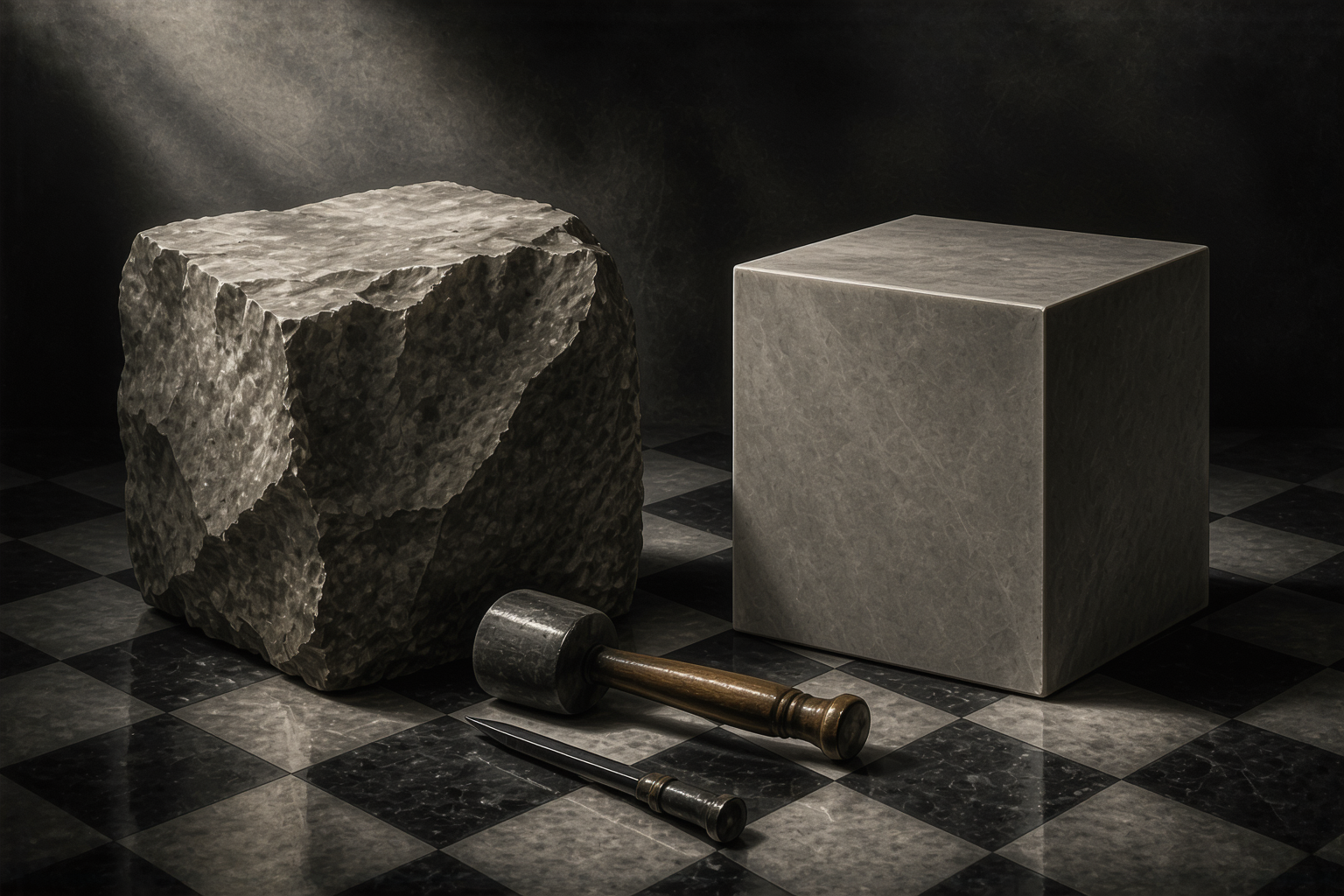
The best-published piece of Masonic symbolism sits in almost every lodge education text I’ve read: the pair of stones. One is rough, unhewn, the way a block comes from the earth. The other is perfectly squared, true on all faces, ready to set into a wall that will hold. The first is the candidate at his beginning. The second is what the Craft intends him to become. Every public Masonic explainer prints this. My trade has a name for that operation. We call it solve et coagula—dissolve and coagulate. Break it down. Build it true.
I should say plainly: I am not a Freemason. I have never knocked on a lodge door, taken an obligation, or sat in a degree. What I write here comes from published sources—Albert Mackey’s Encyclopedia of Freemasonry, the openly printed ritual scripts that exist in the world’s libraries, the historical record that belongs to anyone who reads. I do not claim to know what happens behind closed doors, and I will not pretend I do. But I can read a symbol that Masons themselves have set in print. And when I see the rough ashlar and the perfect ashlar, I recognize the grammar of my own work.
| System | Stage One | Stage Two | Stage Three |
|---|---|---|---|
| Freemasonry | Entered Apprentice | Fellow Craft | Master Mason |
| Spagyric Alchemy | Salt (body, fixed) | Sulfur (soul, animating) | Mercury (spirit, binding) |
| Method | Subtractive (chisel) | — | Recombination |
| Source Tradition | Renaissance hermetic revival | Renaissance hermetic revival | Renaissance hermetic revival |
The Three Degrees and the Three Principles
Freemasonry moves a person through three explicit degrees: Entered Apprentice, Fellow Craft, Master Mason. This is not secret. Every lodge publishes it. The degrees form a staged refinement, a path from rough to true, and they are moral—each degree teaches a person something about virtue, about the work of becoming.
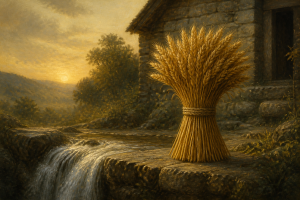
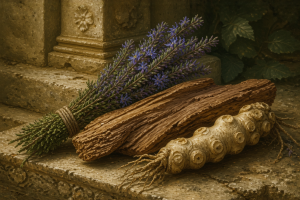
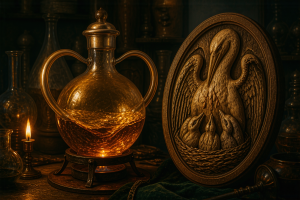
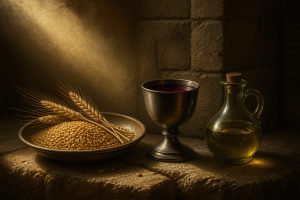
My own craft—spagyrics and plant alchemy—also moves in threes. We work with what the old texts call the tria prima, the three principles: Salt (the body, what is fixed and earthly), Sulfur (the soul, the animating principle), and Mercury (the spirit, what moves between and binds). Every substance holds all three. Our work is to separate them—to dissolve the whole into its parts—then purify each part in isolation, then recombine them into something more refined than what we began with.
The parallel is not forced. Both systems inherit from the Renaissance hermetic tradition. Both assume that perfection comes in stages, that stages have an order, and that the order itself teaches. Three is not arbitrary. Three says: this takes time. This has a grammar. This cannot be rushed.
The Chisel and the Crucible
But the methods differ, and the difference is honest and worth holding.
The Masonic image is subtractive. The stone comes rough from the quarry. The mason’s chisel knocks away what is unshapely, what does not belong, what obscures the true block within. He does not shatter the stone. He refines it. The form is already there, waiting to be revealed. Your rough ashlar contains your perfect ashlar. The work is patient removal.
My method is dissolutive. In the crucible or the still, I do not chip away what is unshapely. I break the whole thing open. I take the herb apart entirely—calcination, fermentation, separation by heat and solvent. The plant ceases to be a plant. It becomes its principles, scattered and purified. Only after that can I recombine them into something stronger, more concentrated, more true than the original ever was. Solve et coagula: dissolve and coagulate.
The destination is the same. The refined thing. But my way assumes the old form cannot survive the process. The mason’s way is gentler. It assumes the true form lives inside, waiting. I have come to believe the truth lies somewhere between. You cannot refine without some dissolution. But you also cannot rebuild without remembering what held the thing together in the first place.
What the Published Record Shows
I want to be clear about where this parallel comes from. I did not invent it. Masonic writers drew it themselves—in public, in books people can buy.
Albert Pike’s Morals and Dogma, printed in 1871 and reprinted many times since, discusses alchemical symbolism at length in its sections on the higher-degree lectures. Pike was a prominent Mason writing for Masons. He did not treat alchemy as some hidden competitor to Masonry. He treated it as a parallel language describing the same work of inner refinement.
Both systems inherit from the Renaissance hermetic revival. Both draw on Paracelsus, on the Emerald Tablet, on the conviction that matter and spirit are not separate things but aspects of one continuous transformation. When Pike wrote about alchemy in a published Masonic text, he was not revealing anything. He was reading the archive that both crafts share.
That is the stance I take here. I read what is published. I follow what Masons have already written about their own symbolism. I recognize in their tools the same grammar I use at my bench. Respect and honest curiosity—that is all.
The Rough Ashlar on My Bench
Here is what the ashlar pair has taught me in practice.
I keep my first tincture. It is rough. It was made when I barely understood the work—when I rushed the maceration, did not tend the fermentation carefully, probably dried the menstruum at the wrong temperature. By any standard of craft, it is not good. I label it with the date and keep it on the open shelf beside my current work.
When I finish a new tincture—one I have spent months building, carefully carrying through the process from fresh herb to finished essence—I stand it next to the rough one. The difference is visible. The color is cleaner. The smell is clearer. The taste has lost its rawness. This is what refinement looks like. Not perfection. But direction. Motion. Evidence that the work has taken.
The Masonic teaching holds that you do not begin as Master Mason. You begin rough. The degrees are meant to show you the possibility of becoming true. But the possibility only means anything if you carry the memory of where you started. The ashlar pair is not a metaphor about shame. It is a statement of fact: this is how development happens. You mark the before. You do the work. You stand them together and you see.
That is a practice worthy of the lodge and the laboratory both.
Frequently Asked Questions
What are the three principles in spagyric plant alchemy?
In this tradition, the tria prima are Salt (the body, what is fixed and earthly), Sulfur (the soul, the animating principle), and Mercury (the spirit, what moves between and binds). Every substance holds all three. The work is to separate them, purify each in isolation, then recombine them into something more refined than the original.
How do Masonic degrees and spagyric principles relate?
Both systems move through three stages of refinement. Freemasonry progresses through Entered Apprentice, Fellow Craft, and Master Mason. Spagyrics works with Salt, Sulfur, and Mercury. Both inherit from Renaissance hermetic tradition and assume that perfection comes in stages, that stages have an order, and that the order itself teaches.
What does Albert Pike say about alchemy in Masonic texts?
In Morals and Dogma, printed in 1871, Pike discusses alchemical symbolism at length in sections on higher-degree lectures. He treated alchemy as a parallel language describing the same work of inner refinement, not as a hidden competitor to Masonry. Both crafts inherit from the Renaissance hermetic revival and draw on shared sources.
How does spagyric dissolution differ from Masonic refinement?
The Masonic method is subtractive—the chisel removes what does not belong, revealing the true form within. Spagyric work is dissolutive—the herb breaks apart entirely through calcination, fermentation, and separation. The old form cannot survive the process. Yet both arrive at a refined result through different methods.
About This Article

Written by Kyle Bamboo. Kyle Bamboo has spent twelve years following the hermetic tradition of herbalism out of dusty reprints and into a home apothecary — spagyrics, planetary correspondences, and the strange internal logic of plant alchemy. Muddle and Mend takes its name from solve et coagula, dissolve and combine. He writes about the actual tradition, with its history, its vocabulary, and its genuine strangeness, not the Instagram version. More about this site.
Scope and limits. Kyle writes from a personal practice in traditional herbalism, not clinical training. Herbs interact with prescription medications and are not regulated as drugs — check interactions and talk to a pharmacist or clinician before taking anything.
Verify this against a primary source
Specifics change, and your situation may differ from the one described here. These are the authorities worth checking directly:
- NCCIH — herb safety, evidence and known interactions
- MedlinePlus Herbs and Supplements — documented interactions and cautions
- FDA Dietary Supplements — regulatory status and safety alerts